
Search Knowledge Base by Keyword
The Complete Guide to altFINS Preset Screener Filters
Every preset screener filter explained — what it finds, how to trade it, and why it matters.
altFINS Crypto Screener includes many pre-defined trading signals, or you can set up your own custom screens using combinations of technical indicators (SMA, EMA, RSI, MACD…) and variables like market cap, traded volume, and price performance.
This guide covers all 8 categories and every preset filter on the altFINS Crypto Screener. For each filter you’ll find a description of what it detects, trading rules, and links to in-depth articles.
Table of Contents
Strategy Blocks
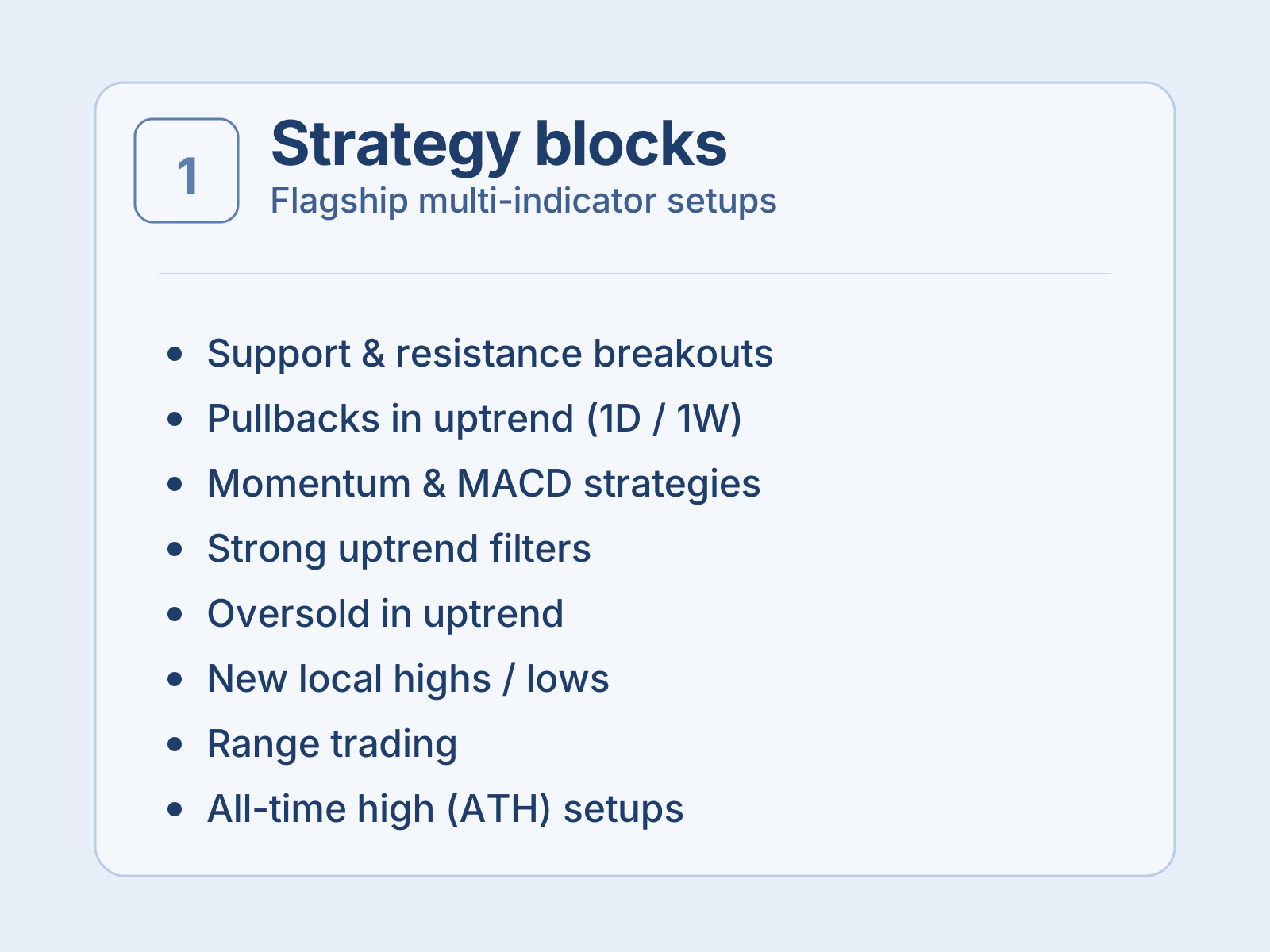
altFINS’s flagship presets. They combine multiple technical indicators into actionable setups so you don’t have to build complex filters from scratch.
Support & Resistance
📖 Support & Resistance – Complete Guide
Resistance Breakout
Finds coins that have just broken above a key resistance level. A breakout above resistance signals that buyers have overwhelmed sellers at a price ceiling, potentially triggering a new upward trend — especially when confirmed by strong volume and momentum.
Support Breakout
Identifies coins that have broken below a support level. This bearish signal suggests selling pressure has overcome a price floor. Traders may use this to look for short opportunities or to exit long positions.
Approaching Support
Coins whose price is nearing a known support zone. Support zones often act as bounce areas. Traders monitor these levels for potential reversal entries with defined risk.
Approaching Resistance
Coins moving toward a key resistance level. Resistance can act as a price ceiling. Traders watch for either breakout confirmation or pullback setups near resistance.
Approaching Support and Oversold
Coins near structural support while momentum indicators (such as RSI) show oversold conditions. This dual confirmation increases the probability of a technical bounce — both price structure and momentum align. Best used for high-probability mean reversion setups.
Approaching Resistance and Overbought
Coins near resistance while momentum indicators show overbought conditions. When a coin reaches a price ceiling with overextended momentum, the probability of a rejection or pullback increases significantly.
Pullback Strategies
📖 How to Trade Pullbacks in Uptrend · 🎥 Pullback In Uptrend – Education Video
Pullback (1D) in Uptrend
Finds coins in an Uptrend that have pulled back in the last 24 hours. This is a trend following strategy — pullbacks in uptrends are classic “buy the dip” opportunities. Even in an uptrend, prices never go straight up. These corrections are opportunities to join a trend. Trading rules: Find coins in uptrend that pulled back → visually check charts for nearest support level → buy near support.
Pullback (1W) in Uptrend
Same concept on the weekly timeframe. Finds coins in an Uptrend that pulled back over the last 7 days. Weekly pullbacks catch larger swing moves and are suited for position traders with a longer holding period.
Momentum Strategies
📖 MACD Indicator Guide · Early Momentum Detection · 🎥 Tutorial
Momentum & UpTrend (v.1)
Looks for altcoins in an uptrend and identifies entry/exit using momentum indicator (MACD). Buy when MACD line crosses above Signal Line → sell when MACD line crosses below. This dual confirmation reduces false signals. More info →
Fresh Bullish Momentum (MACD Signal Line) Crossover
Finds coins with a recent MACD Signal Line Crossover (last 2 intervals). This signal is slightly delayed versus the Histogram inflection but less prone to whipsawing — lower upside potential but more accurate. “Age” refers to intervals since the signal occurred. More info →
Early Bullish Momentum (MACD Histogram) Inflection
Catches the earliest shift in momentum by detecting when the MACD Histogram starts rising. Regardless of trend direction, prices move in up and down swings — this finds coins changing direction from downswing to upswing. Buy on bullish inflection → sell when Histogram declines. More info →
UpTrend and Fresh Momentum Inflection
Trend trading strategy using MACD Histogram to time entries. Coins are in an Uptrend and also early in their upswing (fresh positive momentum). You get the safety of a bullish trend plus a fresh momentum catalyst. More info →
Bullish Momentum with RSI confirmation (v.1)
Requires MACD crossover to be bullish AND RSI to cross above 50 (confirmation). Buy when MACD line crosses above Signal Line with RSI > 50 → sell when bearish MACD crossover. The extra RSI filter ensures you’re not buying into exhausted moves. More info →
Bullish EMA 12/50 Crossovers
Finds coins where EMA 12 recently crossed above EMA 50 and price is above EMA 12. Buy when EMA 12 crosses above EMA 50 → sell when EMA 12 crosses below, or Price drops below EMA 12. Place stop-loss below the prior low. More info → · 🎥 Tutorial
Trend Filters
📖 Strong Uptrend · Crypto Trend Changes
Strong UpTrend
Coins with prices in a strong Uptrend across all three time horizons: Short, Medium and Long-Term. These are rare situations — the highest-conviction bullish setups where all indicators align. Trend is your friend: identifying a trend greatly increases your winning probabilities. More info →
UpTrend
Coins in an Uptrend across all three time horizons. Less strict than Strong UpTrend, capturing coins trending higher even if not every timeframe is perfectly aligned. Textbook definition: a series of Higher Highs and Higher Lows. More info →
Short-Term Trend Upgrade
Coins recently upgraded to Uptrend on a Short-Term horizon — the price has begun to rise and there could be a bullish trend reversal underway. Early trend changes can be lucrative if caught before the broader market notices. Tutorial →
Oversold Strategies
📖 Oversold in Uptrend · Trading RSI
Very Oversold
Swing trading strategy looking for altcoins that are very oversold (RSI < 25) and likely to bounce, especially near a support zone. That’s where sellers reach exhaustion and buyers step in. Some traders use extreme levels (25) to reduce false readings. More info →
Oversold in UpTrend
Trend strategy for altcoins that are oversold but likely to resume their uptrend — similar to buying dips. Find altcoins in Uptrend and oversold (RSI < 40), buy near support. In an uptrend, RSI rarely reaches 30, so we use a higher threshold (40 or 45). More info →
Oversold with Momentum Shift
Combines oversold (RSI 14 < 40), Medium and Long-Term Trends Up, and MACD Histogram turning up. A momentum shift occurs when the downward trend shows signs of reversing — targeting the exact moment a bounce is most likely.
New Local Highs & Lows
📖 New Local High · Using Local Highs to Spot Breakouts · New Local Low
New Local High (5 / 10 / 15 / 20 / 30 / 50 periods)
Coins making new highest prices over the selected lookback window. Helps identify assets with recent strength or coins breaking through resistance. A 5-period high captures short-term breakouts; 50-period indicates significant intermediate-term strength.
New Local Low (5 / 10 / 15 / 20 / 30 / 50 periods)
Coins making new lows over the selected window. Helps find assets with recent weakness or coins breaking through support. Short-period lows signal temporary weakness; longer-period lows (30–50) indicate deeper downtrends or capitulation points.
Trading in Range
📖 Range Trading · 🎥 Tutorial
Bullish Trading in Range (v.1 & v.2)
Swing trading strategy for range-bound coins. Find coins in an Uptrend long-term, but sideways short/medium-term → identify support and resistance zones → buy near support, sell near resistance. Place stop-loss below support zone. Ranges end when a breakout occurs. V.2 uses slightly different criteria.
All-Time High (ATH) Strategies
Within 5% of ATH
Coins trading within 5% of their all-time high. In price discovery mode with no overhead resistance — can lead to strong continuation rallies.
Within 5% of ATH and not very overbought
Near-ATH but excludes heavily overbought RSI readings. Avoids chasing coins that surged too far too fast.
Within 5% of ATH + recent bullish MACD crossover
Near-ATH with a fresh MACD crossover. No overhead resistance plus fresh momentum = high-conviction breakout setup.
Within 5% of ATH + bullish MACD Histogram inflection
Near ATH where the MACD histogram is turning upward — early signal the coin is gathering strength for a new leg higher.
Recent ATH, pulled back but MACD inflecting bullish
“Buy the dip after ATH” strategy with momentum confirmation. Recently hit ATH, pulled back, and MACD Histogram now turning up.
Recent ATH, still within 10%, and not very overbought
Filters for healthy consolidation near highs rather than exhausted moves.
Recent ATH
All coins that recently achieved a new all-time high. Useful as a watchlist starting point to track market leaders.
Trading Chart Patterns
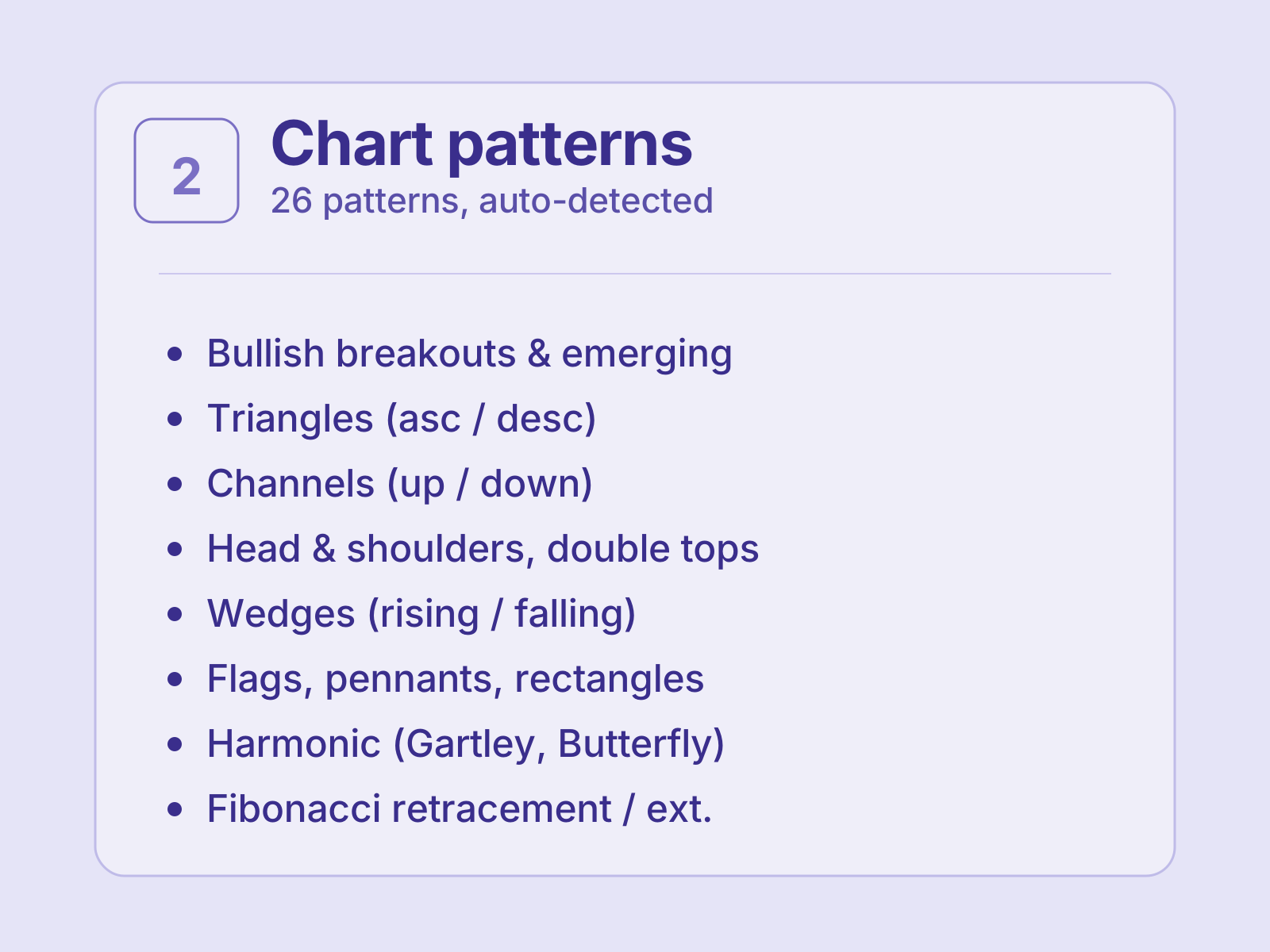
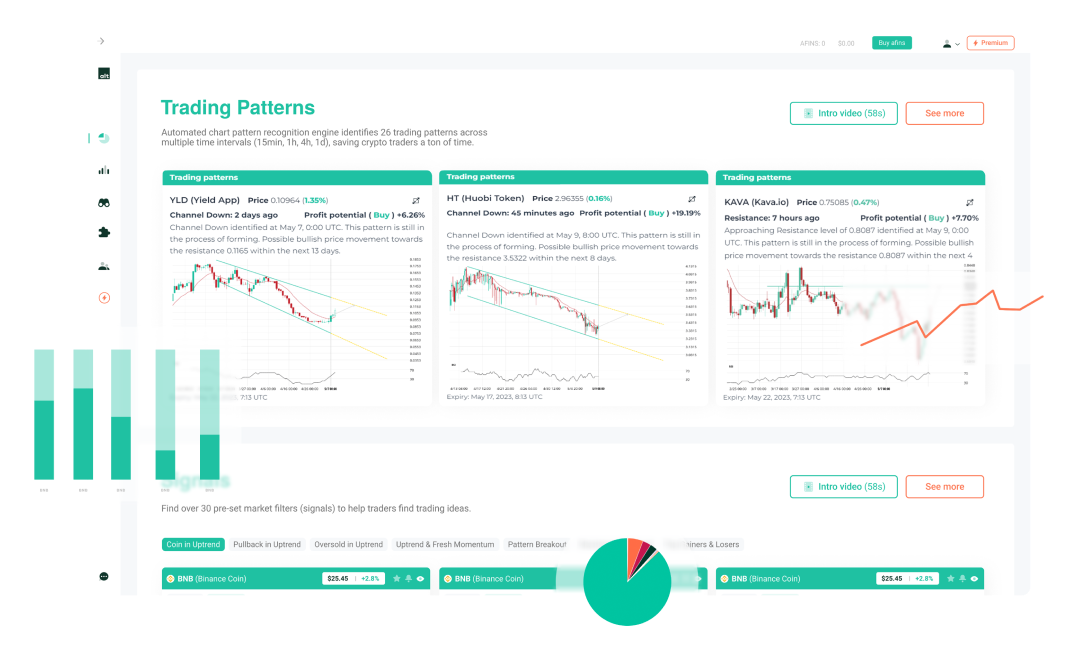
altFINS automatically identifies 26 commonly used chart patterns across multiple time intervals. Patterns are classified as Emerging (still forming) or Complete/Breakout (ready for trading).
📖 Chart Patterns Guide · Cheat Sheet · 10 Steps to Trade Patterns · Emerging vs Complete
Bullish Pattern Combinations
Bullish Pattern Breakouts
Price has broken through the pattern resistance, representing a significant change in sentiment. The pattern is confirmed and ready for trading.
Bullish Emerging Patterns
Patterns still forming (price still between support and resistance lines). Particularly useful for swing traders who trade bounces within the range. Plan entries before breakout. More info →
Bullish Patterns & Uptrend
Bullish chart patterns combined with a confirmed uptrend. Patterns aligned with the dominant trend have higher success rates.
Pattern Breakout & Uptrend
Confirmed breakout in the direction of the prevailing uptrend. A breakout above key resistance signals a buying opportunity as momentum builds. Stop-losses are placed below the breakout point.
Individual Patterns
Ascending Triangle
Continuation pattern — price typically breaks through resistance and resumes its uptrend. Buyers step in at smaller and smaller dips, showing eagerness. Finally they absorb all supply and push past resistance. More info →
Descending Triangle
Horizontal support with descending resistance. Sellers press harder each time. Break below the flat bottom often leads to sharp drops. More info →
Channel Up
Two parallel lines with upward trajectory, signaling bullish consolidation with upward momentum preserved. Buy near lower boundary, sell near upper. More info →
Channel Down
Series of lower highs and lower lows in a downward-sloping parallel channel. Indicates potential continuation of downtrend. Watch for bullish breakout above the channel. More info →
Inverse Head and Shoulders
Three troughs: a lower head between two higher shoulders. Complete when price breaks above the neckline connecting the highs. Powerful bullish reversal signal. More info →
Head and Shoulders / Double Top / Double Bottom / Triple Top / Triple Bottom
Classic reversal patterns. Head & Shoulders: bearish reversal with three peaks. Double/Triple Tops: price tests the same high and fails — bearish. Double/Triple Bottoms: price tests the same low and holds — bullish. More contact points = stronger signal.
Triangle / Rising Wedge / Falling Wedge
Converging patterns that store energy. Triangles break in the dominant trend direction. Rising Wedge typically breaks down (bearish). Falling Wedge usually breaks up (bullish reversal). Falling Wedge guide →
Horizontal Resistance / Horizontal Support
Coins repeatedly testing flat S/R levels. Break above resistance can trigger strong moves as sellers exhaust. Support holding = potential long entry.
Other Patterns
📖 Fibonacci Patterns Explained
Rectangle / Flag / Pennant
Continuation patterns. Rectangle: horizontal S/R box. Flag/Pennant: small counter-trend consolidation after a sharp move. Trade the breakout in the direction of the prior trend.
ABCD / Gartley / Butterfly / Drive
Harmonic patterns using Fibonacci ratios to identify reversal zones. Five-point patterns (Gartley, Butterfly) are more reliable. These are early warning signals — the price must reach the projected level AND encounter S/R there. More info →
Point Retracement / Point Extension / Consecutive Candles / Big Movement
Retracement: Fibonacci levels for timing pullback entries. Extension: Fibonacci targets for profit-taking. Consecutive Candles: sequences of same-direction candles (strong momentum). Big Movement: unusually large single-period moves signaling a major catalyst.
Candlestick Patterns
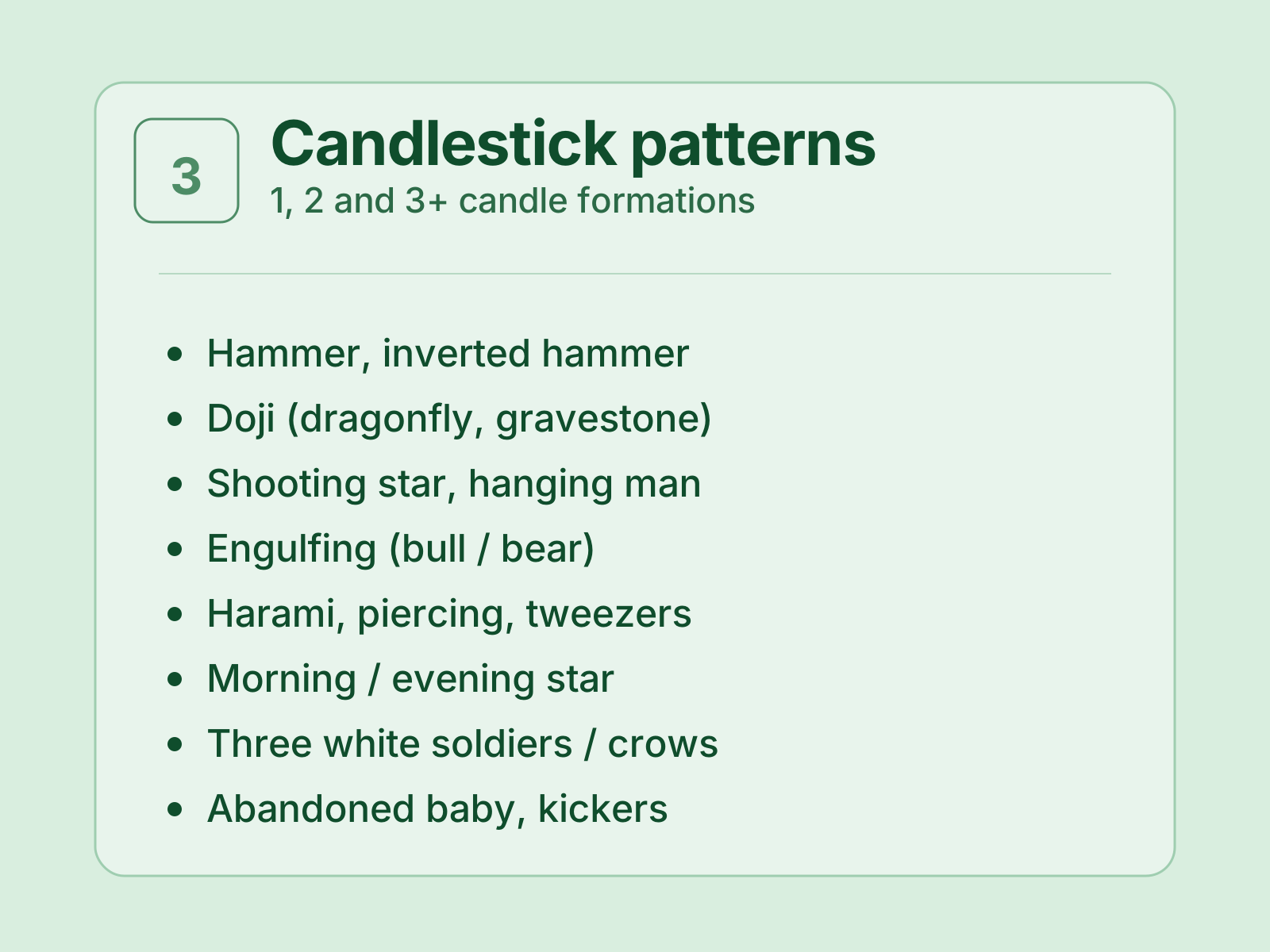
Each candle conveys opening, closing, high and low prices. The arrangement of these candles reveals market sentiment and potential price direction.
📖 Mastering Candlestick Patterns · Essential Patterns
1-Candlestick Patterns
Hammer
Forms after a price drop — sellers pushed down but buyers stepped in strongly. Tiny body, long lower wick. Signals the downtrend may be ending. More info →
Inverted Hammer
At the bottom of a downtrend with a long upper wick. Buyers attempted to push higher — an early sign of trend reversal. More info →
Dragonfly Doji / Perfect Dragonfly
Open, close, and high nearly the same. Sellers drove price down but buyers pushed all the way back. Strong bullish reversal. Perfect version has exact alignment — even more powerful. More info →
Spinning Top (Bullish / Bearish)
Small body, long wicks. Both buyers and sellers active. After a decline = selling pressure weakening (bullish). After an uptrend = bullish momentum fading (bearish). More info →
Hanging Man
At the top of an uptrend with a long lower wick. Strong intraday selling that buyers struggled to absorb. Warns the uptrend may be losing strength. More info →
Shooting Star
After an uptrend, long upper wick. Buyers pushed up but couldn’t sustain — sellers starting to take control.
Gravestone Doji / Perfect Gravestone
Open, close, and low nearly the same. Prices moved much higher but fell back. Strong rejection of higher prices = bearish reversal. More info →
Doji (Bullish / Bearish)
Open and close match, signaling indecision. After a downtrend = selling may be ending (bullish). After an uptrend = buying losing strength (bearish). Confirm with the next candle.
2-Candlestick Patterns
Kicker (Bullish / Bearish)
Sudden, strong shift in sentiment. Second candle opens with a gap, completely reversing prior direction. One of the strongest reversal signals in candlestick analysis.
Engulfing (Bullish / Bearish)
Large candle fully covers the previous candle’s body. Bullish Engulfing: buyers step in aggressively, often marks start of new bullish move. Bearish: sellers overpowering. More info →
Harami (Bullish / Bearish)
Small candle inside the previous large candle’s body. Momentum is contracting — signals potential reversal. Confirm with next candle.
Piercing Line / Dark Cloud Cover
Piercing Line: bullish candle opens lower but closes above midpoint of previous red candle — strong buying interest. Dark Cloud Cover: bearish mirror, opens above but finishes below midpoint.
Tweezer Bottom / Tweezer Top
Two candles with identical lows (bottom) or highs (top). Shows strong S/R where sellers/buyers failed twice. Reliable reversal signal.
3+ Candlestick Patterns
Morning Star / Morning Doji Star
Three-candle bullish reversal: bearish → small star (or Doji) → strong bullish. Sellers losing control, buyers stepping in. Doji version adds more weight to the indecision signal.
Abandoned Baby (Bullish / Bearish)
Rare pattern — Doji gaps away from both surrounding candles. Complete rejection. Bullish version: one of the strongest bottom signals. Bearish version: major top signal.
Three White Soldiers / Three Black Crows
Three consecutive long candles closing higher (Soldiers) or lower (Crows) each time. Persistent, strong directional pressure. More info →
Three Line Strike (Bullish / Bearish)
Three candles in one direction, then a fourth reverses the entire move. Despite looking alarming, the original trend often resumes. Signals brief profit-taking.
Three Inside Up / Three Outside Up
Bullish confirmation patterns. Inside Up: small bullish candle inside a bearish, then confirms higher. Outside Up: engulfing then confirmation. Clear bullish reversal.
Evening Star / Evening Doji Star
Bearish mirror of Morning Star. Strong bullish → star/Doji → large red candle. Clear shift from upward to downward momentum.
Three Inside Down / Three Outside Down
Bearish confirmation patterns — mirror images of their bullish counterparts. Buyers losing momentum, third candle confirms the shift toward a downtrend.
Trend and Momentum
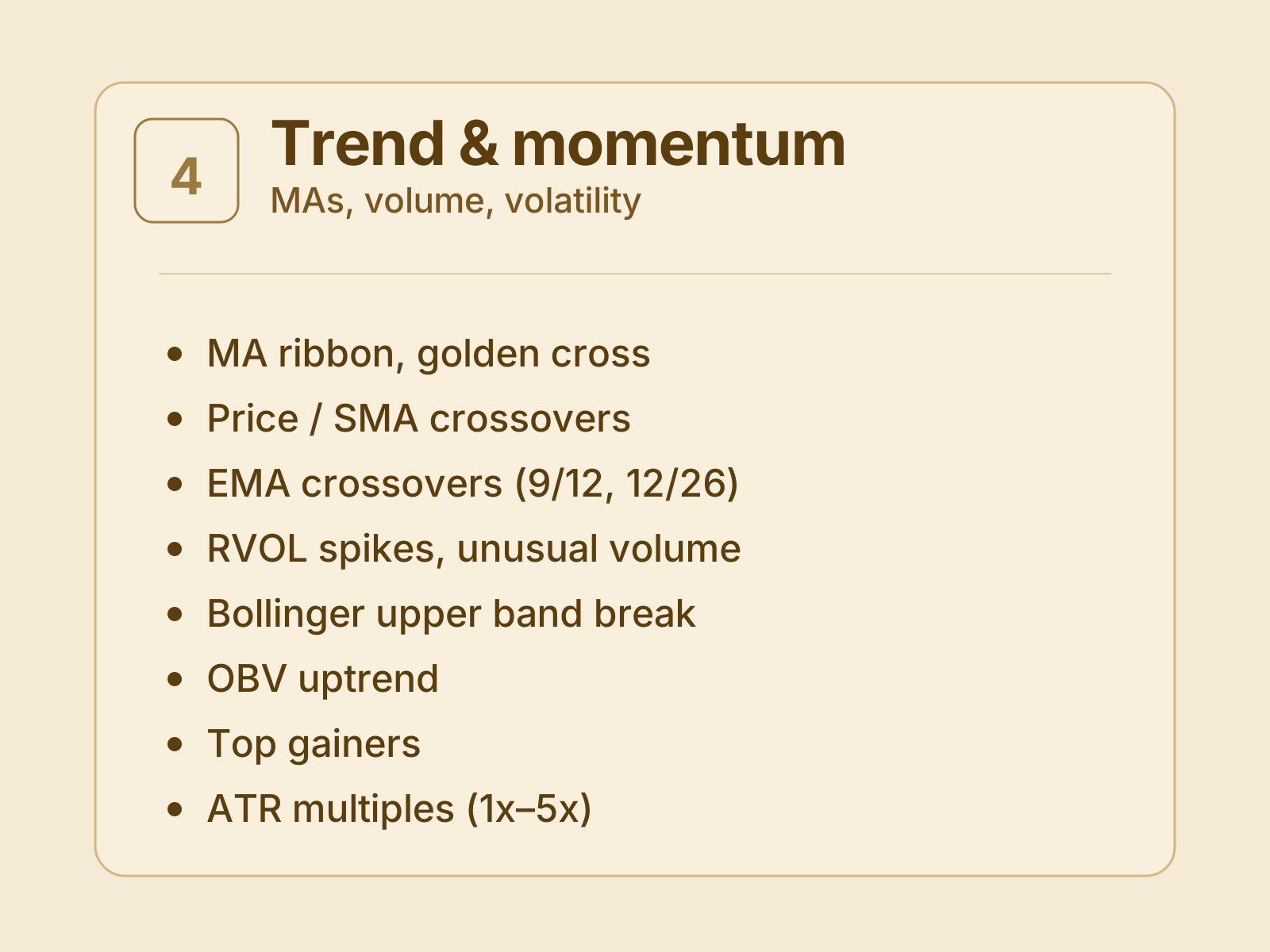
Moving averages, volume, and volatility indicators to identify trending coins and momentum shifts.
📖 Find SMA Crossover Signals · EMA 12/50 · Price/EMA Crossovers · SMA vs EMA
MA Ribbon
Multiple MAs layered together. When all are stacked in order and fanning out = strong trend. Compressed/tangled ribbon = trendless market.
Price / SMA Crossovers (5&10, 10&20, 30&50, 100&200, SMA 200)
Price crossing above SMA = bullish. Since price moves faster than MAs, these crosses occur before MA/MA crosses — more sensitive but can give more false readings. Short pairs for scalpers; 100/200 and SMA 200 are long-term bull/bear dividers. SMAs also serve as dynamic S/R levels. 200-Day SMA →
Price / EMA Crossovers (9&12, 12&26, 50&100, 100&200)
EMA puts greater weight on recent prices, reacts quicker. Price/EMA cross occurs before SMA crosses — better for short-term traders. The 12/26 pair mirrors MACD timeframe. More info →
SMA Crossovers (5/10, 10/20, 20/30, 30/50, 50/200, 100/200)
Short-term SMA crosses above long-term SMA = bullish. Combine multiple crosses to strengthen signal power. SMA 50/200 = Golden Cross — one of the most followed signals in trading. Buy when SMA 50 crosses above 200 and price is above SMA 50.
EMA Crossovers (9/12, 12/26, 26/50, 50/100, 50/200, 100/200)
EMA crossovers are more responsive than SMA. The 12/26 mirrors MACD signal. altFINS lets you combine multiple EMA crosses and set alerts. More info →
RVOL Spike in Uptrend
Relative Volume compares current trading volume to the average over 30 periods. An RVOL spike in an uptrend validates the move and suggests strong institutional buying. More info →
Unusual Volume Gainers
Coins with trading volumes 2x+ higher than the average of last 10 periods AND gaining in price. Unusual volume tells you something important is happening — partnerships, listings, product milestones.
Bollinger Band – Price Broke Upper Band
Prices typically stay within Bollinger Bands 90% of the time, so a breakout above is a significant event — can indicate a bullish breakout and continuation of an uptrend.
On Balance Volume (OBV) UpTrend
OBV measures buying/selling pressure using volume flow. OBV rises when volume on up days exceeds down days. Volume precedes price — sharp OBV increases without price change mean price will eventually follow. More info →
Top Gainers
Coins with the largest price gains. Use for momentum screening or to spot emerging trends early.
ATR: Current Range Above 1x / 2x / 3x / 4x / 5x ATR
Average True Range measures normal volatility. These filters find coins whose current range exceeds their ATR by 1x to 5x. A 1x move is notable; 5x is extraordinary — suggests a major catalyst. More info →
Leading Indicators (Oscillators)
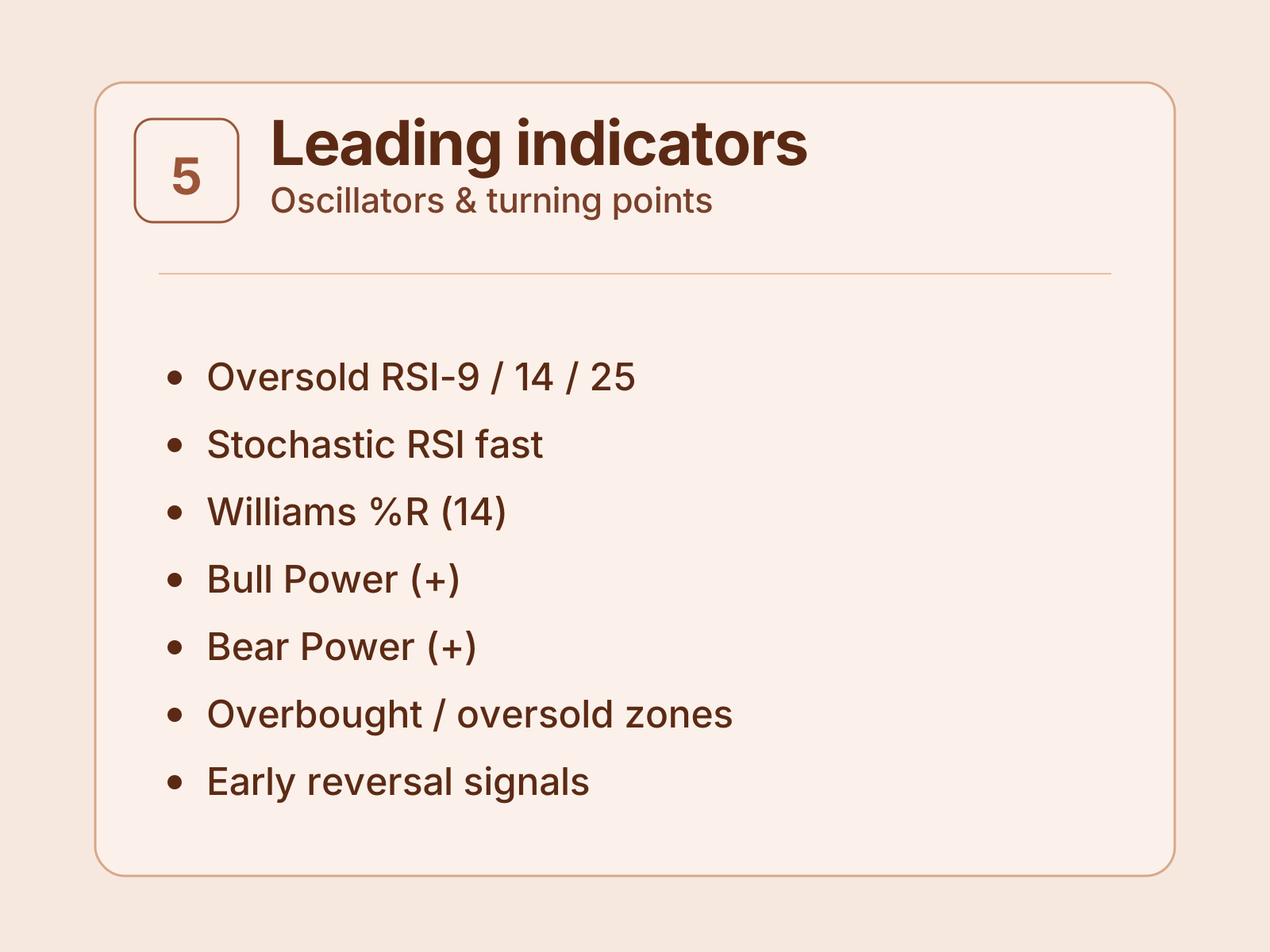
Oscillators measure overbought/oversold conditions to identify potential turning points before the price reverses.
Oversold RSI-9 / RSI-14 / RSI-25
RSI measures the magnitude of recent price changes. Values 0–100. Overbought above 70, oversold below 30 (some use 80/20). RSI-9 is most responsive (short-term). RSI-14 is the standard most traders use. RSI-25 uses a longer lookback — rarer but more meaningful signals. More info →
Oversold Stochastic RSI Fast (3, 3, 14, 14)
Oscillator of an oscillator — measures where current RSI sits relative to its own range. More sensitive than RSI. Readings <20 = oversold, >80 = overbought. Great signals in sideways markets. More info →
Oversold Williams Percent Range (14)
Measures close relative to the high-low range over 14 periods. Oscillates 0 to -100. Overbought: 0 to -20. Oversold: -80 to -100. Popular because it can signal reversals 1–2 periods in advance. More info →
Bull Power (+)
Measures difference between the highest price and a 13-period EMA. Above zero = buyers kept the high above EMA (positive). Divergences between Bull Power and prices indicate the best trading opportunities. More info →
Bear Power (+)
Measures difference between the lowest price and a 13-period EMA. When Bear Power is above zero, even the day’s lowest price is above average — an exceptionally bullish signal. Best used with trend indicators.
Divergence Signals
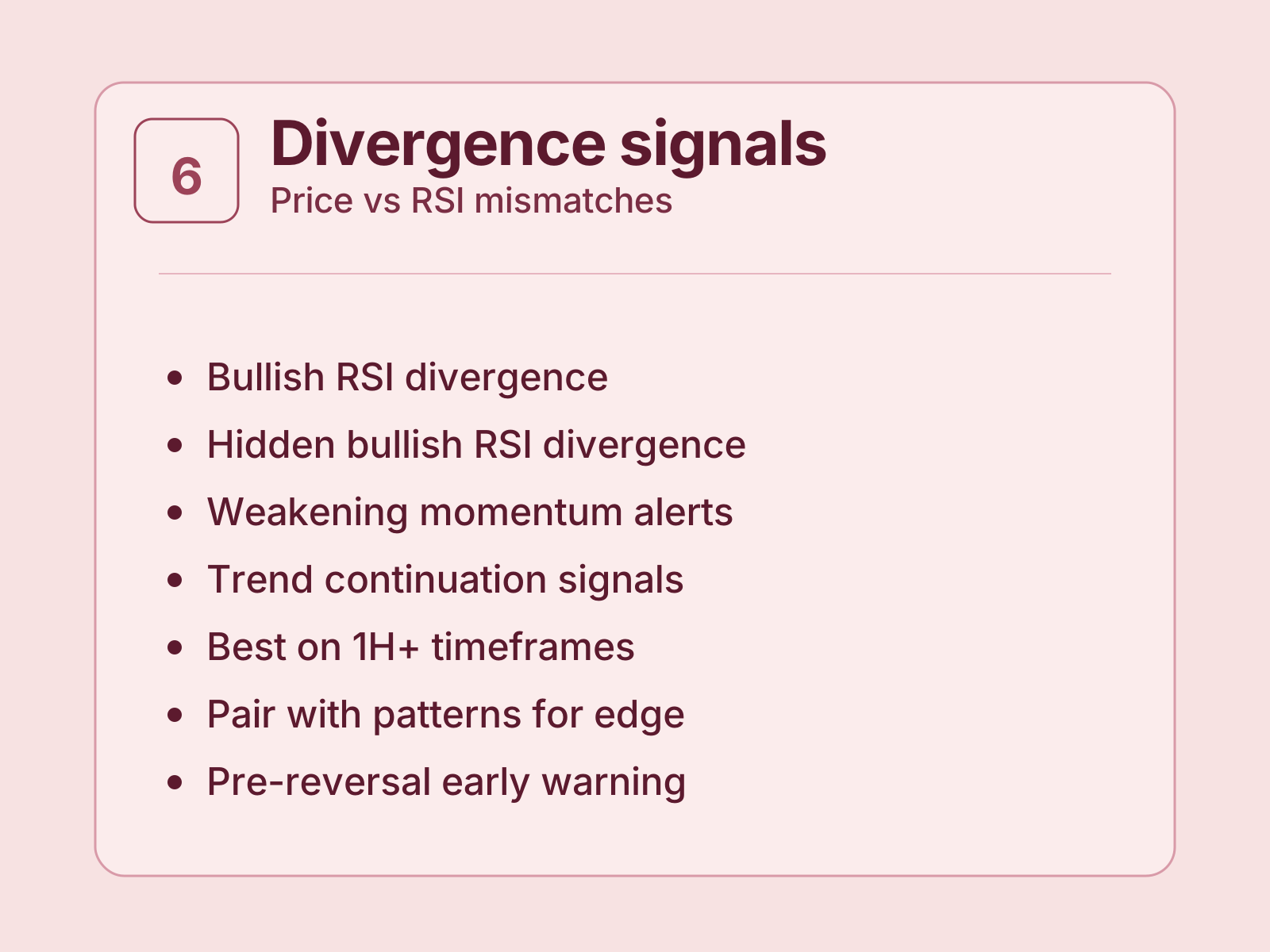
RSI divergence occurs when a coin makes a new high or low in price but the RSI does not make a corresponding new high or low. Divergence signals tend to be more accurate on longer timeframes (min 1-hour charts).
📖 RSI Divergence – Complete Guide
Bullish RSI Divergence
Price makes lower lows but RSI makes higher lows. RSI doesn’t confirm the new low — selling momentum is weakening. This shows weakening momentum and often precedes a reversal to the upside.
Hidden Bullish RSI Divergence
Price makes higher lows (uptrend intact) but RSI makes lower lows. The uptrend is stronger than it appears — a trend continuation signal rather than reversal. For best results, combine with additional indicators or chart patterns.
Fundamentals
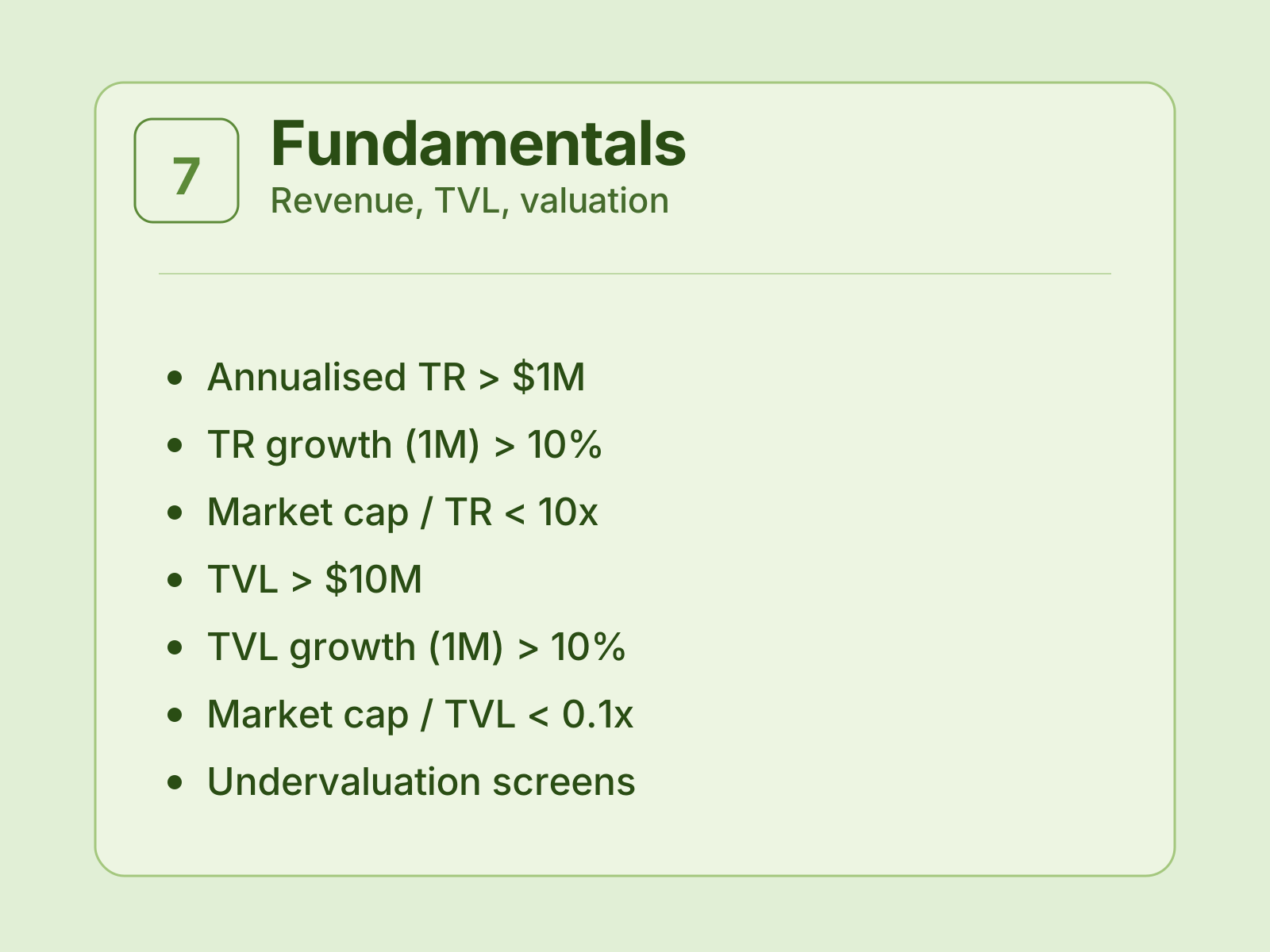
Go beyond technicals. These filters evaluate the underlying health and valuation of crypto projects.
📖 Crypto Fundamental Data on altFINS
Annualized TR > $1M
Total Revenue (TR) includes fees going to the supply-side and protocol treasury — the total amount the platform collects from users. Filters for tokens exceeding $1M annualized, ensuring real on-chain revenue.
TR growth (1M) > 10%
Tokens with 10%+ revenue growth in the past month. Accelerating revenue = strong signal of real-world adoption.
Market Cap / TR < 10x
The lower the ratio, the more attractive — indicates possible undervaluation because market cap doesn’t match revenue strength. Compare with peer projects to determine relative value.
TVL > $10M
Total Value Locked represents all assets staked in a protocol. Measures overall health — the higher the TVL, the more confidence people have in the project.
TVL growth (1M) > 10%
Protocols with 10%+ TVL growth. Growing TVL signals increasing deposits, adoption, and user confidence.
Market Cap / TVL < 0.1x
A ratio below 1.0 means the token is possibly undervalued. Below 0.1x is extreme — the market values the token at a steep discount to the capital locked. Compare with peers to validate the opportunity.
Categories
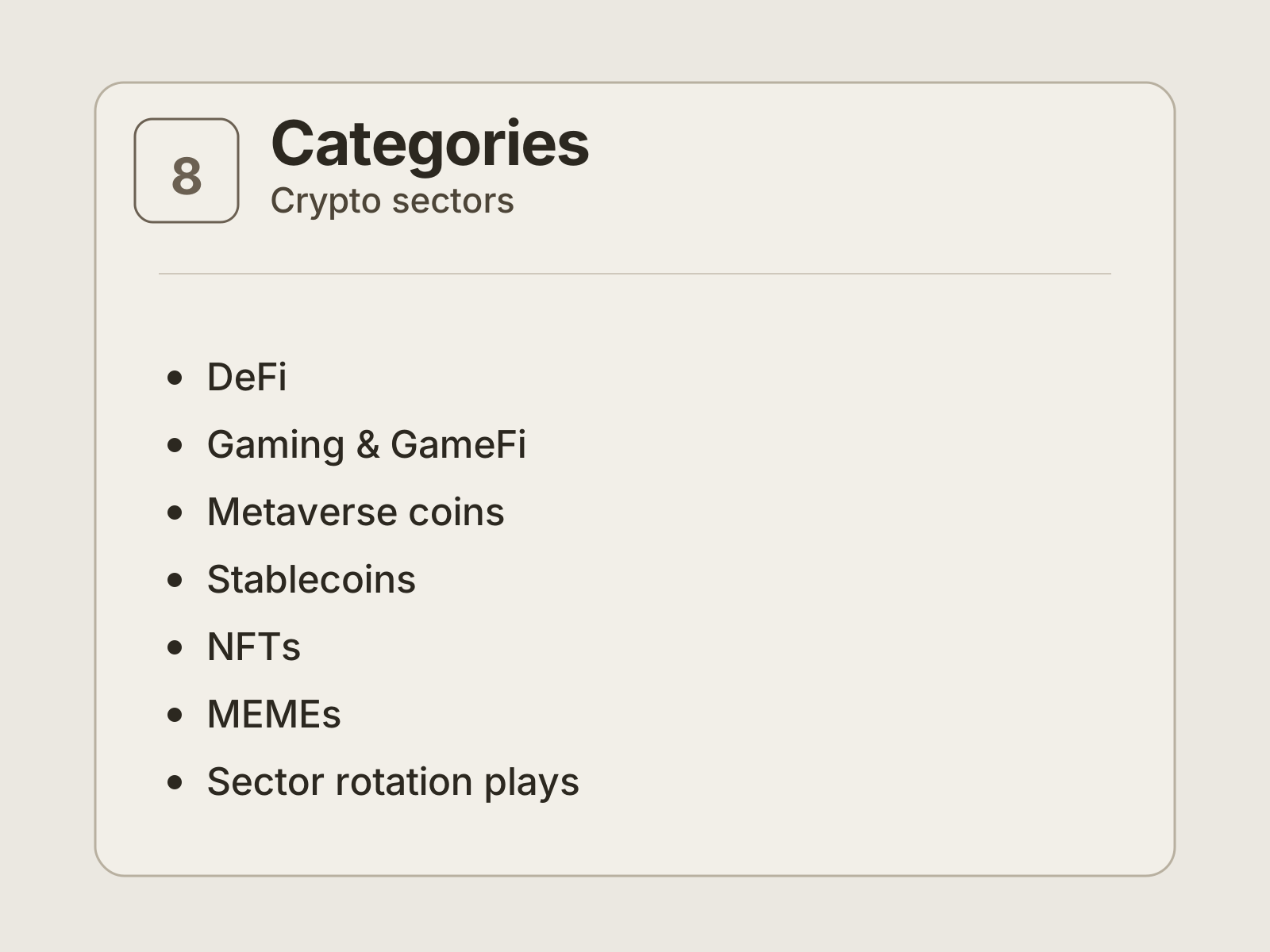
Narrow your screening to specific crypto sectors. Different sectors rotate leadership in bull markets.
DeFi
Decentralized Finance — lending, borrowing, trading, yield farming without intermediaries. One of the most established and revenue-generating sectors.
Gaming
Gaming and GameFi tokens — play-to-earn mechanics and true in-game asset ownership.
Metaverse Coins
Virtual worlds and metaverse platforms for building, socializing, and transacting in immersive digital environments.
Stablecoins
Pegged to fiat or stable assets. Useful for monitoring the landscape and identifying yield opportunities.
NFTs
NFT platforms and marketplaces — creation, trading, and management of unique digital assets.
MEMEs
Community-driven meme coins. High volatility, social media momentum, speculative trading. Can produce outsized returns but carry significantly higher risk.
💡 Pro Tips: Getting the Most From Preset Filters
Combine across categories. Use a Strategy Block like “Oversold in UpTrend” alongside a bullish candlestick pattern like “Hammer” for multiple confirmations.
Check the broader market. Even the best filter signals can fail in a strong bear market. Verify BTC’s trend and overall sentiment first.
Layer fundamentals on technicals. A bullish chart pattern AND strong revenue growth is more compelling than technicals alone.
Match timeframe to your style. Short-term → RSI-9, EMA 9/12, 5-period highs. Position traders → SMA 100/200, weekly pullbacks, 50-period highs.
Modify and save filters. You can modify any preset, make it your own, and save it. Registered users keep their custom screens.
Set alerts. Use altFINS alerts on emerging patterns and approaching S/R levels so you act when conditions align.
Ready to start screening?
Open the altFINS Crypto Screener and try these preset filters today.
Learn more about the Screener · Browse Knowledge Base · Free Trading Course