
Search Knowledge Base by Keyword
CoinEx Exchange Review 2026: Features, Fees, Security & What You Should Know Before Trading
Last updated: April 2026 | ~18 min read | CoinEx Exchange Review
TL;DR — Is CoinEx Right for You?
What it is: CoinEx is a Seychelles-based centralized crypto exchange founded in 2017, offering spot, futures, margin, copy trading, staking, and P2P services across 1,300+ tokens.
Best for: Privacy-focused traders (no mandatory KYC up to $10K/day withdrawals), altcoin hunters who want early access to new tokens, and moderate-volume traders looking for a straightforward interface.
Not ideal for: US-based traders (platform unavailable), high-volume professionals needing deep liquidity, or users who prioritize tier-one regulatory oversight.
Bottom line: CoinEx is a competent mid-tier exchange that quietly does a lot of things well — especially altcoin coverage and optional privacy. However, its lack of major regulatory licenses, a $70M hack in 2023 (users were made whole), and average base fees mean it’s not a one-size-fits-all pick. Read on for the full picture.
Table of Contents
- Company Background & History
- Quick Facts at a Glance
- Supported Assets & Trading Pairs
- Key Features & Trading Products
- Fee Structure: Spot, Futures & Withdrawals
- Security: The 2023 Hack & Current Measures
- Regulation & Compliance
- KYC & Privacy
- User Experience & Mobile App
- Customer Support
- Earning Opportunities: Staking, AMM & Earn
- CET Token: Utility & Benefits
- CoinEx vs. Competitors: How Does It Compare?
- Pros & Cons Summary
- Who Should (and Shouldn’t) Use CoinEx?
- Final Verdict
- FAQ
1. Company Background & History
CoinEx launched in December 2017 as part of the ViaBTC Group ecosystem — the same entity behind the ViaBTC mining pool, the CoinEx Smart Chain (CSC), and a decentralized wallet product. The exchange was founded by Haipo Yang, an early Bitcoin investor who also played a prominent role in the Bitcoin Cash (BCH) ecosystem.
Headquartered in the Seychelles, CoinEx initially gained traction through its close association with Bitcoin Cash. Over the years, however, the platform has expanded significantly. It now lists over 1,300 tokens, supports futures trading with up to 100x leverage, and has rolled out copy trading, staking, P2P, and on-chain trading features.
According to CoinEx’s own claims, the platform serves more than 10 million users across 200+ countries and regions. While this figure is self-reported and difficult to independently verify, the exchange consistently ranks in the top 50–80 by volume on tracking platforms like CoinMarketCap and CoinGecko.
The platform’s journey has not been without setbacks. In September 2023, CoinEx suffered a major hot-wallet hack attributed to North Korea’s Lazarus Group, resulting in the loss of approximately $54–70 million. The exchange covered all affected user funds — a response that was widely noted as responsible. Separately, in 2023 the New York Attorney General sued CoinEx for operating without registration, culminating in a $1.7 million settlement and a ban from doing business in New York.
2. Quick Facts at a Glance
| Founded | December 2017 |
| Headquarters | Seychelles |
| Founder | Haipo Yang (ViaBTC Group) |
| Supported Cryptocurrencies | 1,300 + tokens |
| Trading Pairs | 1,900+ |
| Trading Types | Spot, Futures (100x), Margin, Swap, Copy Trading, On-Chain, P2P |
| Base Spot Fee | 0.20% maker / 0.20% taker |
| Base Futures Fee | 0.03% maker / 0.05% taker |
| KYC Required? | No (up to $10K/day withdrawal); Yes for higher limits |
| Native Token | CET (CoinEx Token) |
| Proof of Reserves | Yes (monthly, 100% reserve ratio claimed) |
| US Availability | ❌ Not available |
| Mobile App | iOS & Android |
| Languages Supported | 18 |
3. Supported Assets & Trading Pairs
CoinEx’s token catalog is one of its primary strengths. The platform supports approximately 1,300+ tokens and over 1,900 trading pairs, which places it well above many competitors in terms of asset diversity. Traders will find all major assets (BTC, ETH, SOL, XRP, ADA, etc.) alongside a broad selection of mid-cap altcoins and newer, lower-cap tokens that aren’t always listed on larger exchanges.
This is particularly relevant for altcoin hunters — traders who want early exposure to emerging projects. CoinEx often lists new tokens faster than exchanges like Binance or Coinbase, which have more rigorous listing processes. The flip side is that lower listing barriers can introduce risk: some listed tokens may have thin liquidity, limited track records, or questionable fundamentals.
Additionally, CoinEx’s OnChain Trading feature lets users trade DEX tokens (on Ethereum, Solana, and BNB Chain) directly from the CoinEx interface using their spot balances — without needing to set up external wallets or interact with smart contracts. This bridges the gap between centralized and decentralized trading and gives access to tokens that aren’t formally listed on CoinEx’s spot market.
4. Key Features & Trading Products
CoinEx offers a surprisingly deep product suite for a mid-tier exchange. Here’s what’s available:
Spot Trading: The core product. Clean order book with limit, market, stop-limit, and trigger order types. Supports 1,900+ pairs. The interface is functional and uncluttered — suitable for both beginners and experienced traders.
Futures Trading: Perpetual contracts with up to 100x leverage, available in both linear (USDT/USDC-margined) and inverse (asset-margined) variants. Both isolated and cross-margin modes are supported. CoinEx lists 200+ futures markets — fewer than Binance or Bybit, but adequate for most traders. Funding fees are settled every 8 hours, with the interval shortening automatically in extreme market conditions.
Margin Trading: Enables borrowing to amplify spot positions. Available on select trading pairs.
Copy Trading: Mirror the positions of experienced lead traders on futures. You can set your own risk parameters including take-profit, stop-loss, and investment amount per trade. Useful for newer traders who want managed exposure to derivatives.
Swap (Quick Convert): One-click token conversion without navigating the order book. Supports major pairs like BTC/USDT, XRP/ETH, DOGE/USDC. Trades execute in seconds. Convenient for fast conversions, though the spread may be slightly wider than limit orders on the spot market.
P2P Trading: Buy and sell crypto directly with other users using local currencies. CoinEx acts as escrow. Zero transaction fees on P2P, with support for bank transfers, mobile wallets, and various regional payment methods.
Grid Trading & Auto-Invest: Automated bots that execute trades within a price range (grid) or set up recurring purchases (DCA). Useful for hands-off strategies in ranging or gradually appreciating markets.
OnChain Trading: Trade DEX tokens on Ethereum, Solana, and BSC directly from CoinEx, without needing an external wallet. Gas fees apply, but CoinEx charges no additional trading fees for on-chain trades.
Demo Trading: Practice futures trading without risking real capital. Helpful for beginners learning leverage mechanics.
5. Fee Structure: Spot, Futures & Withdrawals
Understanding exchange fees is critical because even small differences compound over time. Here’s how CoinEx’s fee structure breaks down:
Spot Trading Fees
CoinEx’s base spot fee is 0.20% for both makers and takers at the default VIP 0 level. This is slightly above the industry average (roughly 0.15% maker / 0.19% taker across major exchanges) and notably higher than competitors like Bitget (0.01% with BGB discount) or Binance (0.10% base).
However, CoinEx provides two meaningful ways to reduce these fees:
1. CET Token Discount: Paying fees with CET gives an instant 20% discount, bringing the effective base rate to around 0.16% per trade.
2. VIP Tiers: CoinEx has 6 VIP levels based on CET holdings, total account assets, or 30-day trading volume. The volume thresholds are lower than on many competing platforms. At VIP 2 with CET payment, the effective fee drops to roughly 0.128% — genuinely competitive for moderate-volume traders.
Futures Trading Fees
Futures fees start at 0.03% maker / 0.05% taker. These are competitive with the industry average (approximately 0.024% maker / 0.053% taker) and on par with or better than what many mid-tier exchanges charge out of the box. VIP tiers reduce these further.
Deposits & Withdrawals
All crypto deposits are free. Withdrawal fees vary by asset and network — for example, BTC withdrawals cost approximately 0.0005 BTC, while USDT fees differ significantly between ERC-20 and TRC-20 networks. Always check the exact fee before confirming a withdrawal.
Fiat deposits are available through third-party gateways (Mercuryo, MoonPay, etc.) and carry their own fees — typically 1–3.5% depending on the provider and payment method. CoinEx itself doesn’t charge extra on top, but the third-party costs can add up.
⚡ Key takeaway on fees: CoinEx’s base spot fees are average, not best-in-class. But once you factor in CET discounts and relatively accessible VIP tiers, the effective rates become competitive — especially for futures, where CoinEx starts strong. If you’re a casual or moderate-volume trader, the costs are reasonable. High-frequency traders may find better rates elsewhere at the same volume levels.
6. Security: The 2023 Hack & Current Measures
The September 2023 Hack
Any honest review of CoinEx must address the significant security breach of September 12, 2023. On that day, CoinEx’s risk control system detected anomalous withdrawals from multiple hot wallets. The incident was attributed to compromised private keys, and independent blockchain analysts — including ZachXBT and SlowMist — linked the attack to North Korea’s Lazarus Group.
Estimates of total losses range from $54 million to $70 million, with assets stolen across multiple chains including ETH, BTC, TRON, XRP, SOL, and BNB. CoinEx immediately suspended all deposits and withdrawals, transferred remaining hot-wallet funds to secure cold storage, and published lists of suspect wallet addresses.
The critical point for users: CoinEx committed to 100% compensation for all affected users and fulfilled that commitment. No user lost funds. Services were fully restored within approximately 10 days.
Current Security Measures
Post-hack, CoinEx has implemented or strengthened the following:
Cold/Hot Wallet Architecture: The majority of user funds are stored in institutional-grade cold wallets with offline private key management and multi-signature protocols. A small portion remains in hot wallets for operational liquidity.
Shield Fund: CoinEx allocates 10% of all trading fees into a dedicated Shield Fund, which stood at over $33 million as of mid-2025. This fund exists specifically to cover potential future security incidents.
Proof of Reserves (PoR): CoinEx publishes monthly proof-of-reserves reports claiming a 100% reserve ratio. This was one of the first such implementations among mid-tier exchanges — a direct response to the FTX collapse. Users can verify that the exchange holds enough assets to cover all client balances.
Account-Level Security: Two-factor authentication (2FA), separate passwords for login/withdrawals/trading, anti-phishing codes, IP whitelisting, and multi-signature withdrawal approvals are all available. However, most of these features are optional — users must manually activate them.
Partnership with SlowMist: CoinEx works with blockchain security firm SlowMist for ongoing cybersecurity auditing and real-time monitoring.
⚠️ Neutral assessment: CoinEx’s post-hack security posture is substantially improved, and the Shield Fund adds a meaningful layer of user protection. However, the 2023 breach is a real data point in the exchange’s history. Security is never a one-time achievement — it requires continuous investment. Users should activate all available security features and avoid keeping large holdings on any centralized exchange.
7. Regulation & Compliance
This is an area where CoinEx takes a different approach compared to some of the most heavily regulated exchanges, and it’s something users should consider based on their individual preferences.
CoinEx is registered in the Seychelles and operates globally, serving users in over 200 countries. While it does not currently hold tier-one regulatory licenses in jurisdictions such as the United States, European Union, United Kingdom, or Japan, this structure allows the platform to offer broader accessibility and flexibility to a global user base.
For context, some competitors like Coinbase and Kraken have pursued more localized regulatory frameworks, including state-level licenses in the U.S. or specialized banking licenses, while others like Bitget maintain registrations across multiple countries.
In 2023, CoinEx reached a settlement with the New York Attorney General related to its prior operations in the state. As part of the agreement, the platform implemented geoblocking for New York users and restricted U.S.-based accounts to withdrawal-only access. The matter was resolved without admission of wrongdoing.
In practice, CoinEx’s model reflects a more globally oriented, compliance-adaptive approach rather than a jurisdiction-specific licensing strategy. For many users—particularly those outside highly regulated markets—this can translate into easier access, fewer restrictions, and a more flexible trading experience.
Ultimately, whether this structure is a benefit depends on what a user values most: global accessibility and flexibility, or the additional assurances that come with top-tier regulatory oversight.
8. KYC & Privacy
One of CoinEx’s most frequently cited advantages is its flexible approach to identity verification:
Without KYC, users can withdraw up to $10,000 per day and $50,000 per month. This makes CoinEx one of the few mature, mid-tier exchanges that still allow meaningful anonymous trading. Registration requires only an email and password.
With KYC (personal identity verification), daily withdrawal limits increase to $1,000,000 — and access to certain features may expand.
However, it’s important to note a caveat that has frustrated some users: CoinEx’s AML (Anti-Money Laundering) system can flag accounts and require KYC completion even below the stated thresholds, particularly if deposit patterns or withdrawal behavior triggers an alert. Some users have reported difficulty recovering funds in these situations, which adds a layer of uncertainty to the “no-KYC” promise.
9. User Experience & Mobile App
CoinEx’s interface strikes a reasonable balance between simplicity and functionality. The web platform is clean and well-organized, with a logical navigation structure that doesn’t overwhelm newcomers.
The spot trading interface features a standard layout: order book, charting (powered by TradingView), order entry panel, and trade history. It’s not as feature-rich as Binance’s professional view, but it’s more approachable. Charting tools include common technical indicators and drawing tools.
The mobile app (iOS and Android) covers the core experience well. Spot and futures trading, portfolio overview, staking, and basic alerts are all accessible. The app interface mirrors the web experience closely, so switching between platforms feels consistent.
The platform supports 18 languages, which reflects CoinEx’s global ambitions. A dark theme is available for those who prefer it.
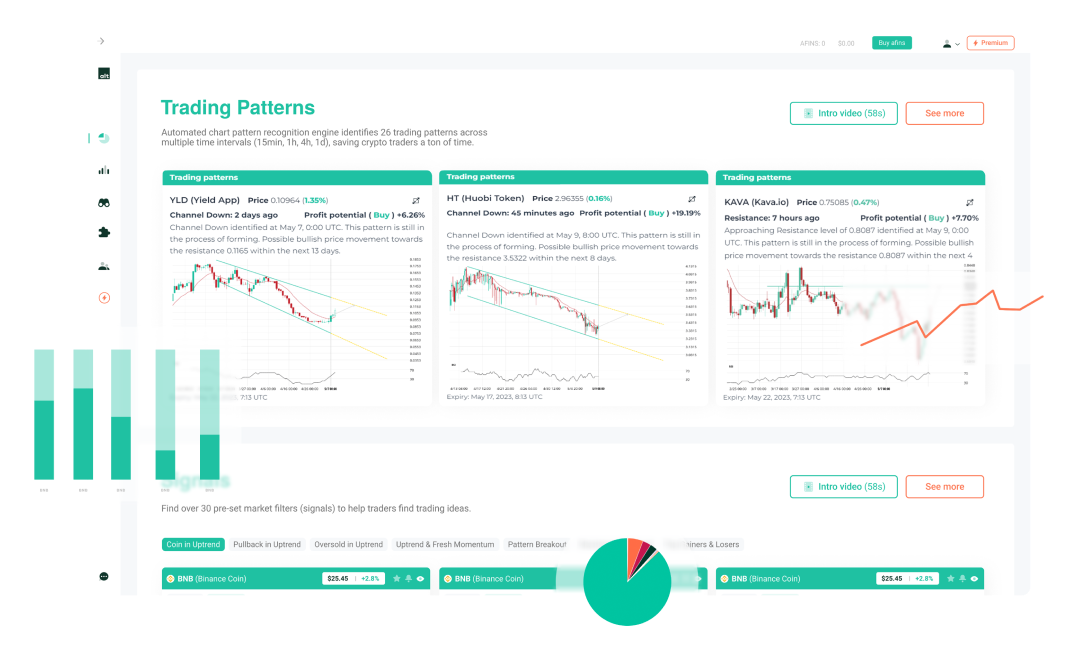
One area where CoinEx doesn’t stand out is in advanced trading tooling. If you need sophisticated charting, strategy backtesting, or algorithmic order types, you’ll likely supplement CoinEx with external tools like a crypto screener or TradingView.
10. Customer Support
CoinEx provides customer support through a ticket system, live chat, and social media channels. The platform also maintains a comprehensive Help Center and FAQ section — the self-service knowledge base covers most common questions about account setup, trading mechanics, deposits, and withdrawals.
However, user reviews on platforms like Trustpilot present a mixed picture. Many users report positive experiences with basic issues being resolved promptly. Others have noted delays when dealing with more complex problems — particularly around account restrictions, AML-triggered freezes, or withdrawal issues. The absence of phone support is a gap for users who prefer direct communication.
Overall, support quality appears to be adequate but not exceptional — roughly in line with what you’d expect from a mid-tier exchange.
11. Earning Opportunities: Staking, AMM & Earn
CoinEx provides several ways to put idle crypto to work:
Staking: Available for assets including SOL (~4.9% APY), TRX (~3.8%), ADA (~2.2%), and CET (no service fee). CoinEx charges a 10% service fee on staking rewards for most assets — this is deducted automatically before rewards reach your wallet. CET staking is the exception, with zero fees.
Financial Account (Earn): Deposit idle funds for daily compound interest. Annualized yields vary between 2–8% APY depending on the asset and product. Some products have offered promotional rates up to 70% APY on select assets, though these are typically time-limited.
AMM Liquidity Mining: Provide liquidity to active trading pairs and earn a share of transaction fees (up to 50% fee-sharing). Returns have historically ranged from 6–15% APY on high-volume pools, though this varies significantly with market conditions.
Crypto Loans: Borrow against your crypto holdings with high loan-to-value ratios. Useful for accessing liquidity without selling positions, though this introduces liquidation risk if collateral values drop.
The earning product lineup is respectable for an exchange of CoinEx’s size, though not as extensive as what Binance or Bybit offer. The yields are competitive but not exceptional — and as with all centralized lending/staking products, your funds are custodied by the exchange.
12. CET Token: Utility & Benefits
CET is CoinEx’s native utility token, and holding it unlocks several practical benefits:
Trading Fee Discount: Paying spot fees with CET provides an instant 20% reduction. This stacks with VIP tier discounts.
VIP Tier Progression: CET holdings count toward VIP level qualification, alongside total account assets and 30-day trading volume.
Zero-Fee Staking: CET staking has no service fee, unlike other assets.
Ecosystem Participation: Access to governance activities, exclusive campaigns, and ecosystem events.
If you plan to trade regularly on CoinEx, accumulating some CET makes practical sense — the fee savings compound over time. However, like any exchange token, CET’s value is fundamentally tied to the platform’s success and trading volume. It should be treated as a utility holding rather than a standalone investment.
13. CoinEx vs. Competitors: How Does It Compare?
No exchange exists in a vacuum. Here’s how CoinEx stacks up against four major alternatives:
| Feature | CoinEx | Binance | Bybit | Kraken |
|---|---|---|---|---|
| Tokens Listed | 1,300+ | 400+ | 600+ | 300+ |
| Base Spot Fee | 0.20% | 0.10% | 0.10% | 0.25% / 0.40% |
| Base Futures Fee | 0.03% / 0.05% | 0.02% / 0.04% | 0.02% / 0.055% | 0.02% / 0.05% |
| No-KYC Trading | ✅ Up to $10K/day | ❌ | Limited | ❌ |
| Max Futures Leverage | 100x | 125x | 100x | 50x |
| US Available | ❌ | ✅ (Binance.US) | ❌ | ✅ |
| Regulatory Licenses | Seychelles only | Multiple (France, UAE, etc.) | Multiple | Wyoming bank + EU |
| Proof of Reserves | ✅ Monthly | ✅ | ✅ | ✅ |
Takeaway: CoinEx wins on token variety and privacy (no-KYC access), holds its own on futures fees, but trails on base spot fees and regulatory standing. If your primary concern is regulatory protection or you need US access, Kraken or Coinbase are stronger picks. If low fees at high volume are priority, Binance or Bybit may serve better. CoinEx’s niche is the intersection of altcoin breadth and trading privacy.
14. Pros & Cons Summary
| ✅ Pros | ❌ Cons |
|---|---|
|
Massive altcoin selection (1,300+ tokens) No mandatory KYC up to $10K/day Competitive futures fees (0.03%/0.05%) Monthly Proof of Reserves Shield Fund ($33M+) for security incidents 100% user compensation after 2023 hack Clean, beginner-friendly interface OnChain trading bridges CEX and DEX Free crypto deposits 18 languages supported CET token provides genuine fee savings |
Not available in the US, Canada, or some other markets No tier-one regulatory license $54–70M hack in September 2023 Base spot fees (0.20%) above industry average Liquidity can be thin on smaller altcoin pairs Customer support response times inconsistent AML system can force KYC below stated thresholds Futures market selection smaller than top-tier exchanges Fiat on-ramp via third parties adds fees Advanced trading tools limited compared to Binance/Bybit |
15. Who Should (and Shouldn’t) Use CoinEx?
CoinEx is a good fit if you:
→ Want access to a huge range of altcoins, including newer and smaller-cap tokens
→ Value privacy and prefer trading without mandatory identity verification
→ Are based outside the US and don’t require a heavily regulated platform
→ Trade moderate volumes and can benefit from CET discounts and lower VIP thresholds
→ Want a straightforward interface that doesn’t overwhelm beginners
→ Are interested in on-chain (DEX) trading within a CEX environment
CoinEx may not be ideal if you:
→ Are in the United States or Canada
→ Prioritize tier-one regulatory oversight and investor protections
→ Trade very high volumes and need deep liquidity on a wide range of pairs
→ Need advanced professional trading tools, options, or sophisticated order types
→ Want the lowest possible base fees without needing to hold a native token
16. Final Verdict
CoinEx is the kind of exchange you might overlook because it doesn’t advertise loudly — but it does a lot of things quietly well.
The altcoin selection is extensive. The no-KYC policy is genuinely useful and increasingly rare. The fee structure, while not the cheapest at base level, rewards active traders with accessible VIP tiers and meaningful CET discounts. The post-hack Shield Fund and monthly Proof of Reserves show a platform that learned from its mistakes.
The weaknesses are real: no tier-one regulatory licenses, and liquidity that can run thin on less popular pairs. These aren’t deal-breakers for everyone, but they’re worth weighing honestly.
For traders outside the US who want broad market access, flexibility on privacy, and a platform that works without drama, CoinEx makes a solid case as a secondary or even primary exchange. For US-based traders, those who require regulatory assurance, or professionals needing institutional-grade depth, other platforms are better suited.
Our neutral rating: 7.7 / 10 — A competent, improving mid-tier exchange with clear strengths in altcoin coverage and privacy, offset by regulatory gaps and a security history that demands ongoing vigilance.
17. Frequently Asked Questions
Is CoinEx a legitimate exchange?
Yes. CoinEx has been operational since 2017, serves millions of users globally, publishes monthly Proof of Reserves, and has a verified track record. However, it operates without tier-one regulatory licenses, and US users are prohibited from accessing it.
Is CoinEx safe to use?
CoinEx employs cold storage, multi-signature protocols, and a Shield Fund backed by over $33 million. That said, it was hacked for $54–70M in September 2023 (all users were compensated). As with any centralized exchange, users should enable all available security features and avoid storing large amounts long-term.
Can I use CoinEx in the United States?
No. CoinEx does not allow U.S. customers to open new accounts or use its services. Following a 2023 settlement with the New York Attorney General, the platform is banned from operating in New York, and it has since restricted access for all U.S. citizens and residents, including geoblocking U.S. IP addresses and freezing existing U.S. accounts to withdrawal‑only.
Does CoinEx require identity verification (KYC)?
Not for basic trading. You can trade and withdraw up to $10,000/day and $50,000/month without completing KYC. Full verification (government ID) is required for higher withdrawal limits ($1M/day) and may be triggered by the platform’s AML system.
What are CoinEx’s trading fees?
Base spot fees are 0.20% for both makers and takers. Base futures fees are 0.03% maker and 0.05% taker. Both can be reduced through VIP tier progression and CET token discounts (20% off spot fees when paying with CET).
What happened during the CoinEx hack?
On September 12, 2023, compromised hot-wallet private keys allowed attackers (attributed to North Korea’s Lazarus Group) to drain an estimated $54–70 million across multiple blockchains. CoinEx suspended all services, rebuilt its wallet infrastructure, and compensated 100% of affected users. The Shield Fund was subsequently established to cover future incidents.
What is the CET token?
CET (CoinEx Token) is CoinEx’s native utility token. It provides a 20% discount on spot trading fees, contributes to VIP tier qualification, can be staked with zero service fees, and grants access to ecosystem activities. Its value is tied to CoinEx’s platform usage and trading volume.
Does CoinEx support fiat deposits?
Yes, through third-party payment providers like Mercuryo and MoonPay. You can deposit using credit cards, debit cards, and bank transfers in 60+ local currencies. Note that third-party gateways charge their own fees (typically 1–3.5%).
How does CoinEx compare to Binance?
Binance offers deeper liquidity, lower base fees, more futures markets, and broader regulatory coverage. CoinEx wins on altcoin variety (1,300+ vs. 400+) and privacy (no-KYC trading up to $10K/day). CoinEx is a good complement for altcoin access; Binance is stronger as an all-around primary exchange for most traders.
Disclaimer: This article is for informational purposes only and does not constitute financial, investment, or legal advice. Cryptocurrency trading involves substantial risk of loss. Always conduct your own research (DYOR) and consult qualified professionals before making investment decisions. The information presented here was accurate to the best of our knowledge as of April 2026 but may have changed since publication. We are not affiliated with CoinEx and receive no compensation for this review.