
Search Knowledge Base by Keyword
Crypto Chart Patterns: The Complete 2026 Guide to 26 AI-Detected Patterns
Reading time: 37 min | Updated: 2026 | Category: Crypto Chart Patterns
Crypto chart patterns are visual price formations that help traders predict future market direction. altFINS‘ AI engine automatically scans the market 24/7 and identifies 26 proven chart patterns across 4 timeframes (15m, 1h, 4h, 1d) — the most reliable being the Inverse Head and Shoulders (84% success rate), Head and Shoulders (82%), and Double Bottom (82%).
⚡ Quick Answer (TL;DR)
What are crypto chart patterns? Chart patterns are repeating price formations (triangles, wedges, flags, head & shoulders) traders use to predict breakouts, reversals, and trend continuations.
Which are most reliable? Inverse Head & Shoulders (84%), Head & Shoulders (82%), Double Bottom (82%), Channel Up (73%), Channel Down (72%).
Best tool to detect them? altFINS automatically scans the top 500 coins and flags 26 patterns in real time across 4 timeframes
📑 Table of Contents
What Are Crypto Chart Patterns?
Chart patterns are visual formations created by the price movements of an asset on a chart. They help traders anticipate future price direction based on historical behavior. In crypto trading, recognizing these patterns can signal potential breakouts, reversals, or trend continuations — crucial insights for making informed decisions.
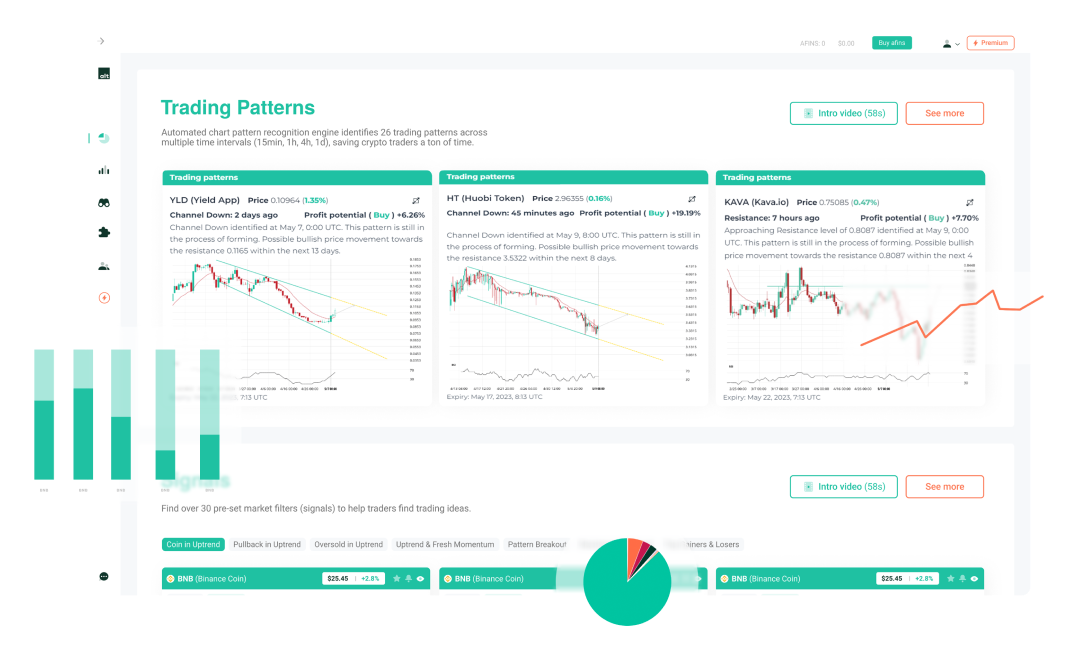
altFINS takes the guesswork and manual effort out of this process with its automated chart pattern recognition engine, which scans the market 24/7 and identifies 26 powerful chart patterns across multiple timeframes. It’s built for crypto trading live, detecting classic formations like Head and Shoulders, Triangles, and Flags, or advanced harmonic patterns like Butterfly and Gartley, instantly.
Want the fast-track version? Check the altFINS Chart Patterns Cheat Sheet or dive into Getting Started with altFINS.
The 26 AI Chart Patterns altFINS Detects
altFINS’ automated chart pattern recognition engine identifies 26 crypto chart patterns across 4 time intervals (15 min, 1h, 4h, 1d):
| Reversal Patterns | Continuation Patterns | Harmonic / Fibonacci |
|---|---|---|
| Head and Shoulders | Ascending Triangle | ABCD |
| Inverse Head and Shoulders | Descending Triangle | Butterfly |
| Double Top / Double Bottom | Symmetrical Triangle | Gartley |
| Triple Top / Triple Bottom | Bullish / Bearish Flag | Drive |
| Rising Wedge | Bullish / Bearish Pennant | 3-Point Extension |
| Falling Wedge | Rectangle, Channel Up/Down | 3-Point Retracement |
| Support / Resistance | Big Movement | Consecutive Candles |
👉 Explore live chart pattern scans on altFINS →
Success Rates of Crypto Chart Patterns
Based on historical backtests across thousands of trades, here are the success rates of the most popular chart patterns on altFINS:
| Pattern | Success Rate | Reliability |
|---|---|---|
| Inverse Head and Shoulders | 84% | ⭐⭐⭐⭐⭐ Highest |
| Head and Shoulders | 82% | ⭐⭐⭐⭐⭐ Very High |
| Double Bottom | 82% | ⭐⭐⭐⭐⭐ Very High |
| Channel Up | 73% | ⭐⭐⭐⭐ High |
| Channel Down | 72% | ⭐⭐⭐⭐ High |
| Triangle | 62% | ⭐⭐⭐ Moderate |
| Rectangle | 58% | ⭐⭐⭐ Moderate |
| Pennant | 56% | ⭐⭐ Lower |
💡 Key insight: Patterns that emerge over longer timeframes (1D) generally are more reliable and result in larger price moves than the same pattern on shorter intervals (15m, 1h). Learn more in 10 Steps to Trade Chart Patterns.
These success rates come from the altFINS pattern engine. Filter live patterns by success rate.
Breakout Patterns vs. Emerging Patterns
altFINS categorises every detected pattern as either Emerging (forming) or Complete (broken out). Read the full breakdown in the Emerging vs. Complete knowledge base article.
What Are Breakout Patterns?
Breakout patterns form when the price breaks through a key support or resistance line — signaling the potential start of a new trend. Breakouts can be:
- Bullish: price breaks above resistance, suggesting upward momentum
- Bearish: price breaks below support, indicating downward momentum
Breakouts are favored by momentum traders looking to ride trends early. See Crypto Breakouts Explained for the full walkthrough.
What Are Emerging Patterns?
Emerging patterns form when price still trades within established support and resistance levels — the pattern is developing but hasn’t broken out yet. These setups suit swing traders who profit from price oscillating within a range.
All 26 Crypto Chart Patterns Explained
1. Ascending Triangle Pattern 📈
Type: Bullish continuation | Forms in: Uptrend
Description: Two or more equal highs forming a horizontal resistance line, plus rising troughs forming an ascending support line. Buyers gradually gain strength while sellers hold a consistent resistance level.
How to trade: Enter a long position when price breaks above horizontal resistance with increased volume. The expected move equals the triangle’s widest section. Full guide: How To Trade Ascending Triangles →
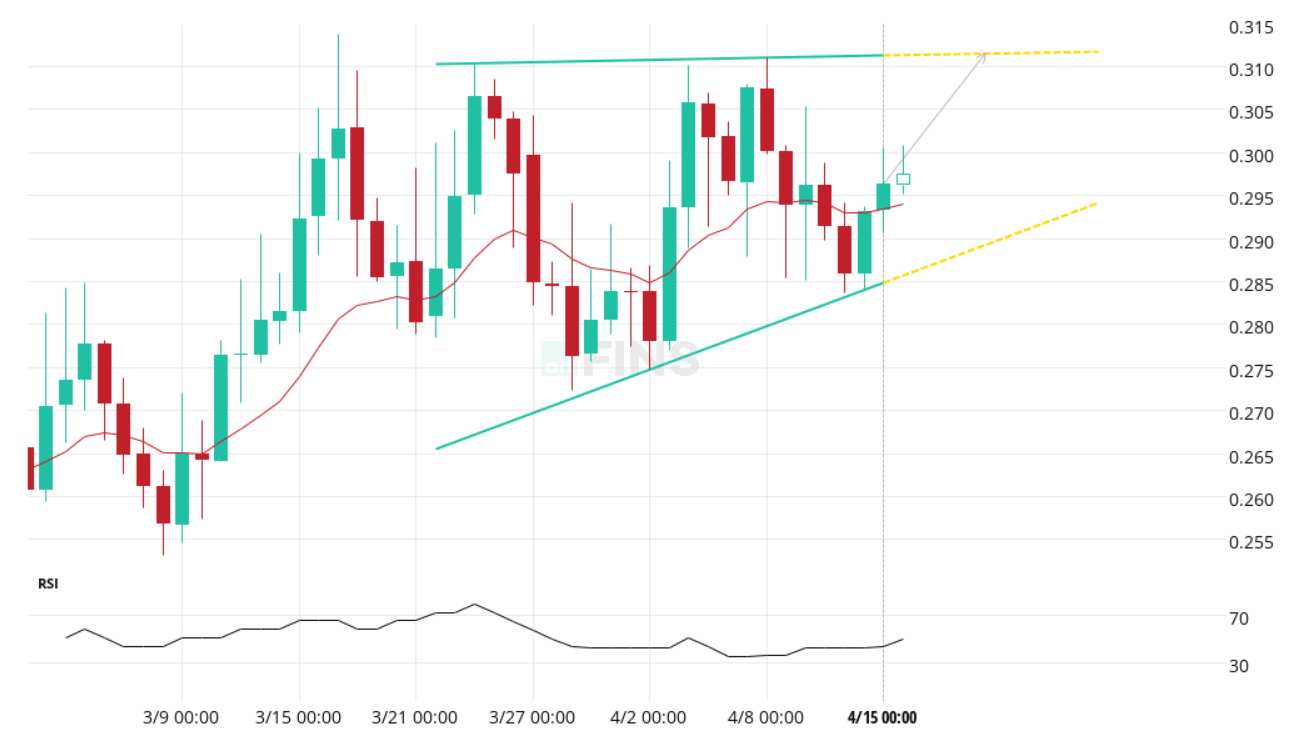
📊 Real example: SFP (SafePal formed an Ascending Triangle on 1 day interval, signaling a bullish breakout toward $0.311 over 4 days. See more examples →
👉 See coins forming an Ascending Triangle right now →
2. Descending Triangle Pattern 📉
Type: Bearish continuation | Forms in: Downtrend | Success rate: ~67%
Description: Flat support level combined with a descending resistance line. Each bounce off support creates a lower high, signaling weakening buyer momentum.
How to trade: Enter a short position when price breaks below support with increased volume. Full guide: How To Trade Descending Triangle →
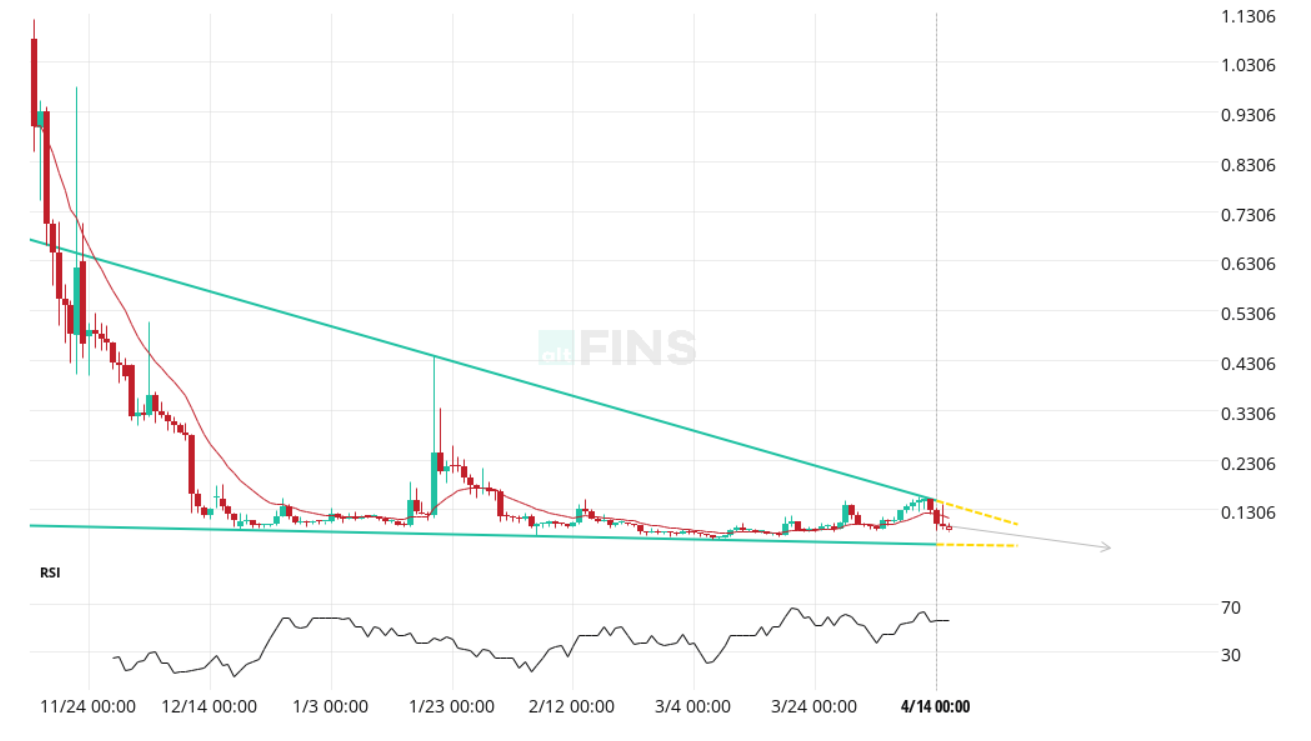
📊 Real example: SYRUP (Maple Finance) formed a Descending Triangle on 1 day interval, with a projected 12.38% decrease toward $0.2 support over 13 days.
3. Symmetrical Triangle Pattern ⚖️
Type: Continuation (direction-neutral) | Forms in: Consolidation
Description: Highs and lows converge on low volume — a period of market indecision. When investors decide direction, the breakout happens with significantly higher volume.
How to trade: Enter at the breakout point in the direction of the breakout — typically a continuation of the larger trend. Full guide: How To Trade Symmetrical Triangle →
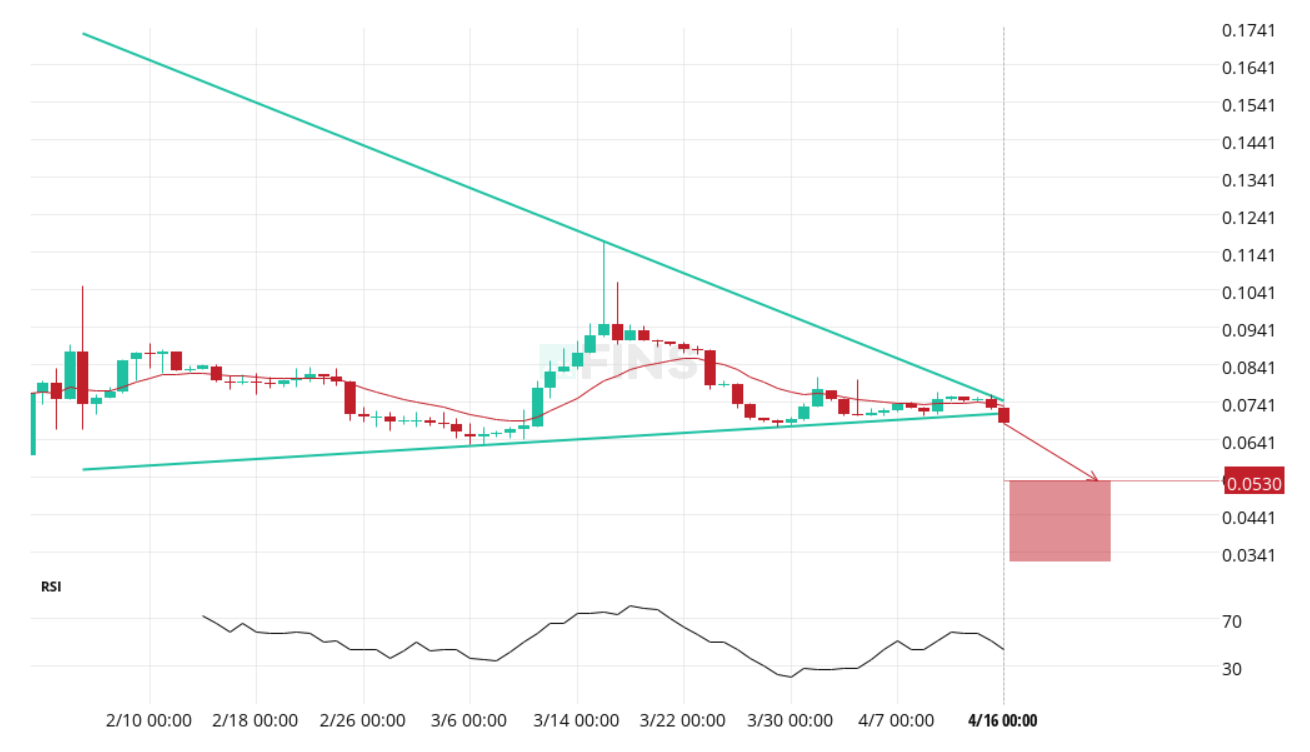
📊 Real bearish example: WMTX (World Mobile Token) broke down of a Triangle pattern with a potential 26.14% decrease toward $0.053 over 11 days.
4. Head and Shoulders Pattern 👤
Type: Bearish reversal | Success rate: 82%
Description: Three successive peaks — the middle (head) is highest, flanked by two lower peaks (shoulders) of relatively equal height. A horizontal neckline connects the lows.
How to trade: Wait for price to break below the neckline after the right shoulder’s peak, then enter a SELL trade.
5. Inverse Head and Shoulders Pattern 🏆
Type: Bullish reversal | Success rate: 84% (HIGHEST)
Description: Three troughs — the middle (head) is lowest, flanked by two higher troughs (shoulders) of equal height, connected by a neckline acting as resistance.
How to trade: Enter a BUY trade when price breaks above the neckline with strong volume. Full guide: How To Trade Inverse Head and Shoulders →
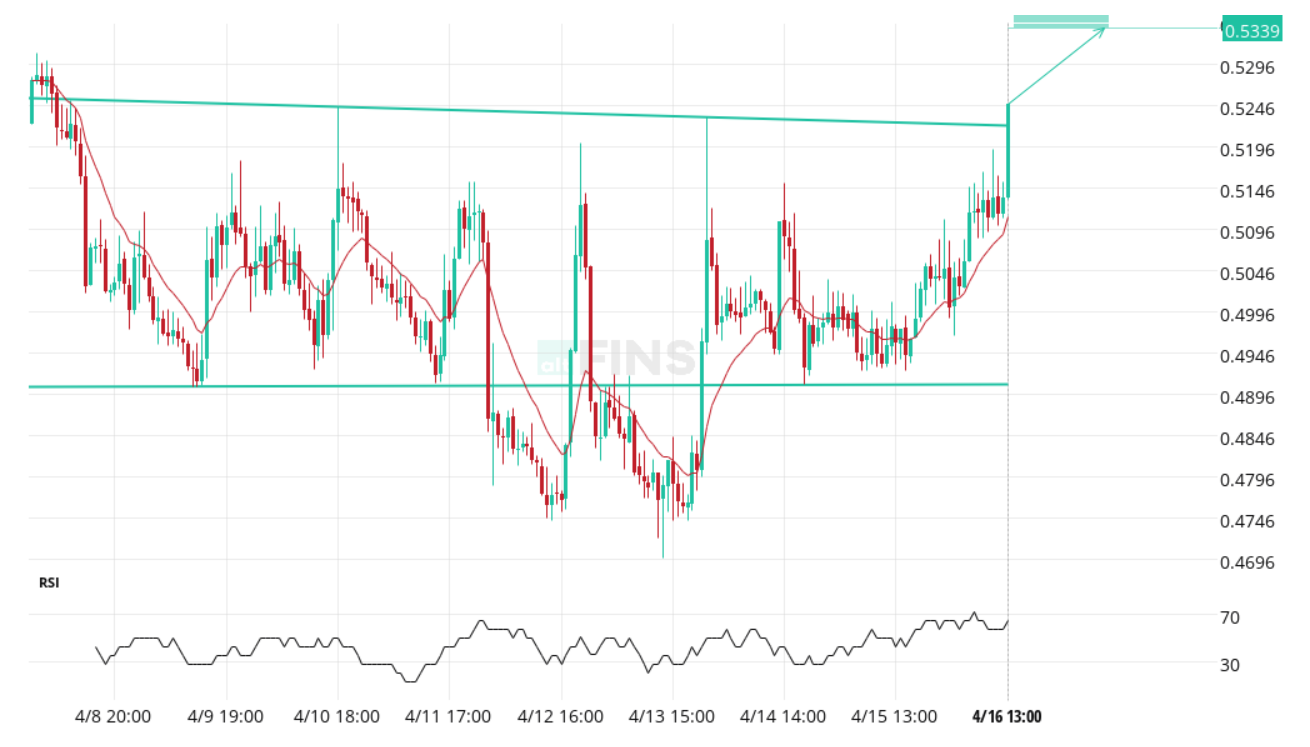
📊 Real example: IP (Story) broke out of an Inverse Head and Shoulders toward $0.5339 over 2 days.
6. Channel Up Pattern ⬆️
Type: Bullish trend | Success rate: 73%
Description: Price consistently moves higher between two upward-sloping parallel trendlines, making higher highs and higher lows.
How to trade: Buy near the lower trendline; take profits near upper resistance. A breakout above the upper trendline signals continuation.
7. Channel Down Pattern ⬇️
Type: Bearish trend | Success rate: 72%
Description: Price consistently trends lower between two downward-sloping parallel trendlines, making lower highs and lower lows.
How to trade: Short near upper boundary; cover near lower boundary. A breakout above signals bullish reversal. Deep-dive: Channel Down & Falling Wedge Breakouts →
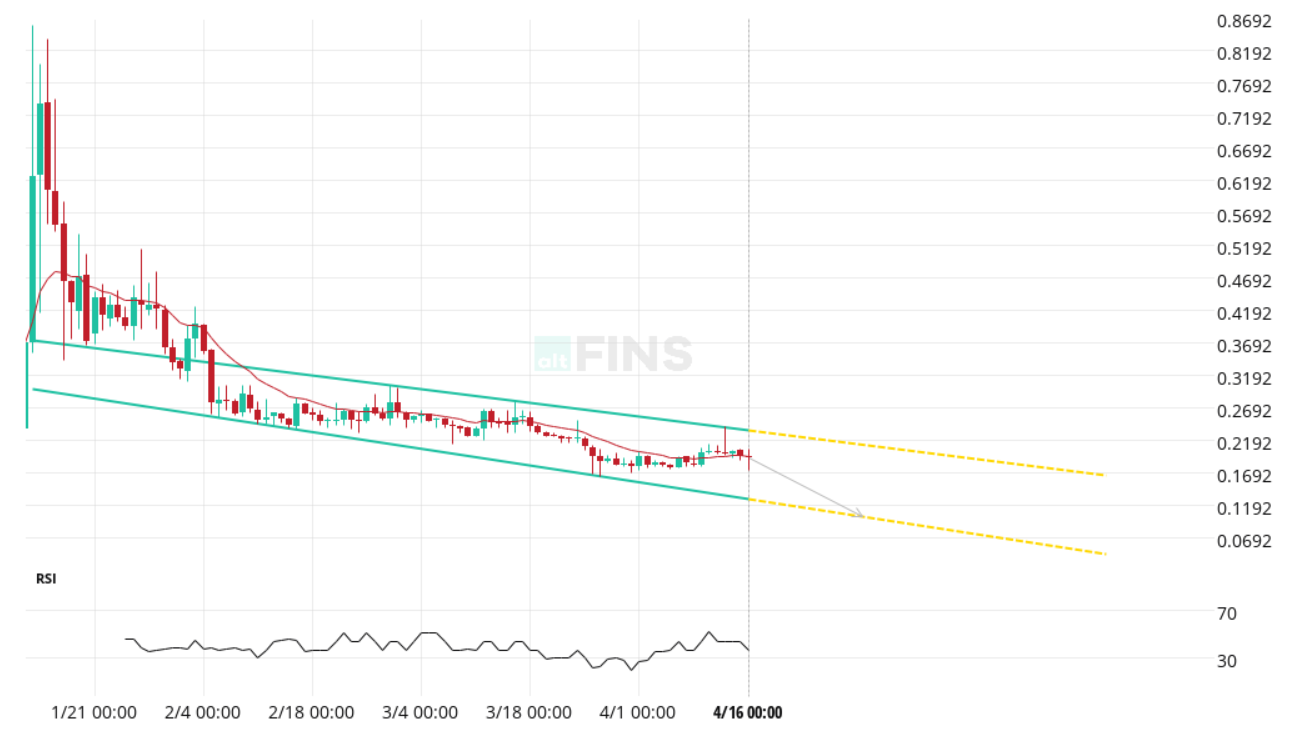
📊 Real example: ARRR (Pirate Chain) formed a Channel Down signaling a potential bearish reversal with a projected 46.38% decrease toward $0.103 over 18 days.
8. Bearish Flag Pattern 🚩
Type: Bearish continuation
Description: After a sharp downward move, price consolidates in a slight upward-sloping or sideways range before the downtrend resumes.
How to trade: Enter short when price breaks below the flag’s lower boundary with increased volume.
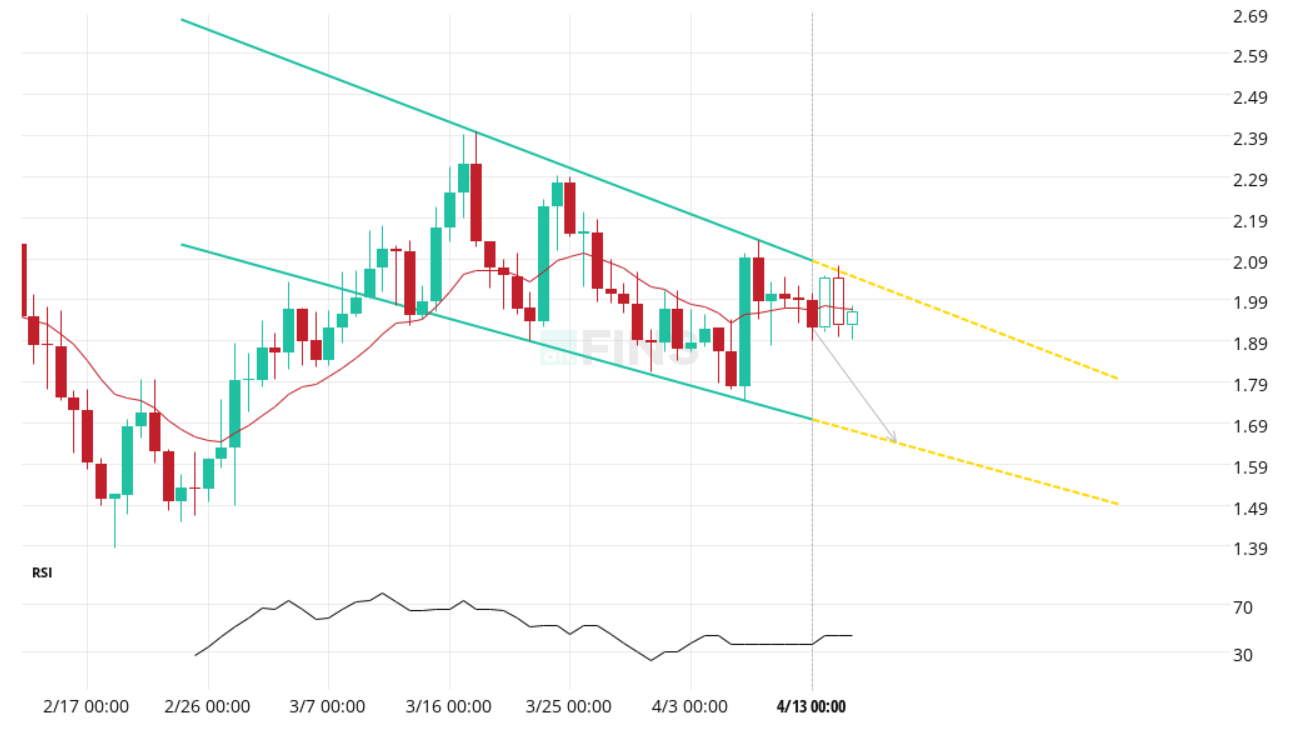
📊 Real example: ZRO (LayerZero) formed a Bearish Flag.
9. Bullish Flag Pattern 🏴
Type: Bullish continuation
Description: After a strong upward move (the “flagpole”), price consolidates in a small downward-sloping or sideways range (the “flag”) before resuming the uptrend.
How to trade: Enter long when price breaks above the flag’s upper boundary with increased volume. Full guide: How To Trade Bullish Flag →
👉 See coins forming a Bull Flag right now →
10. Falling Wedge Pattern 🔻
Type: Bullish reversal | Success rate: ~64%
Description: Two converging downward-sloping trendlines. Falling Wedge tends to be more reliable than Rising Wedge and typically results in a bullish breakout.
How to trade: Enter BUY when price breaks above the upper trendline with rising volume. Full guide: How To Trade Falling Wedge →
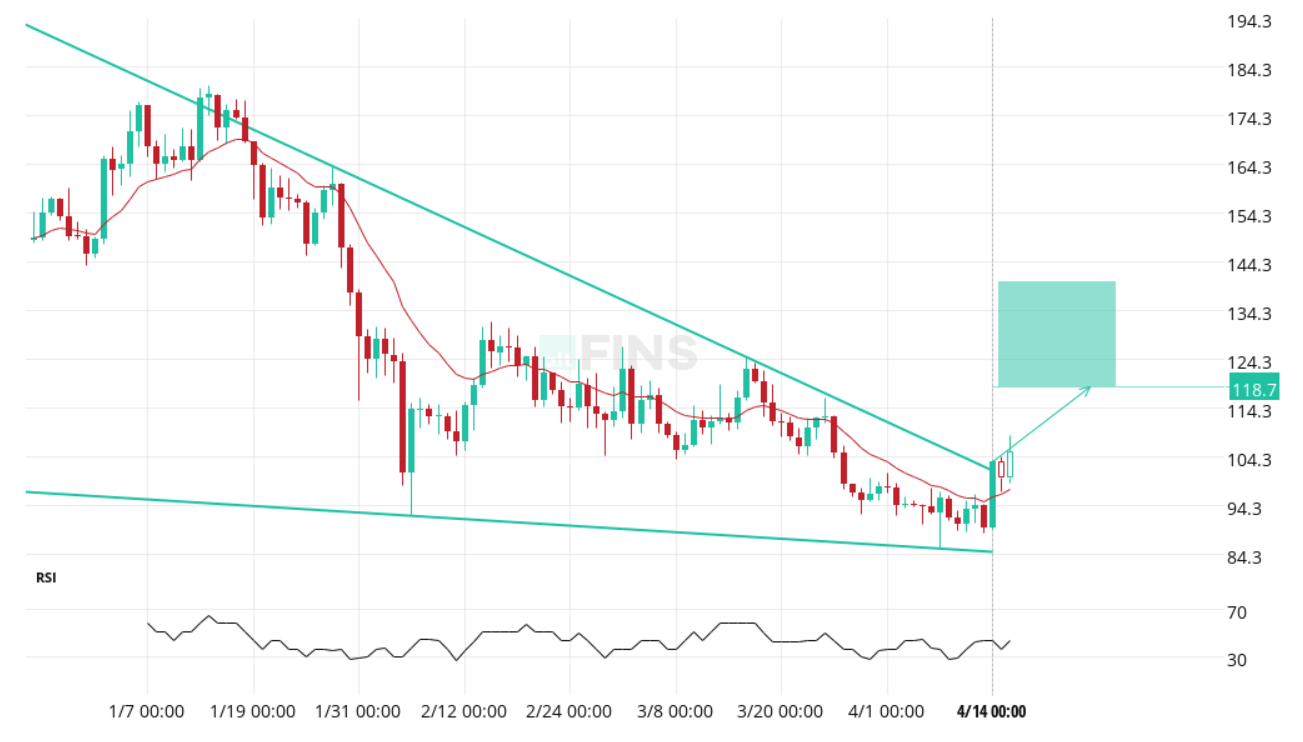
📊 Real example: AAVE broke out of a Falling Wedge with a potential 12.84% increase toward $118.7 over 21 days.
👉 See coins forming a Falling Wedge right now →
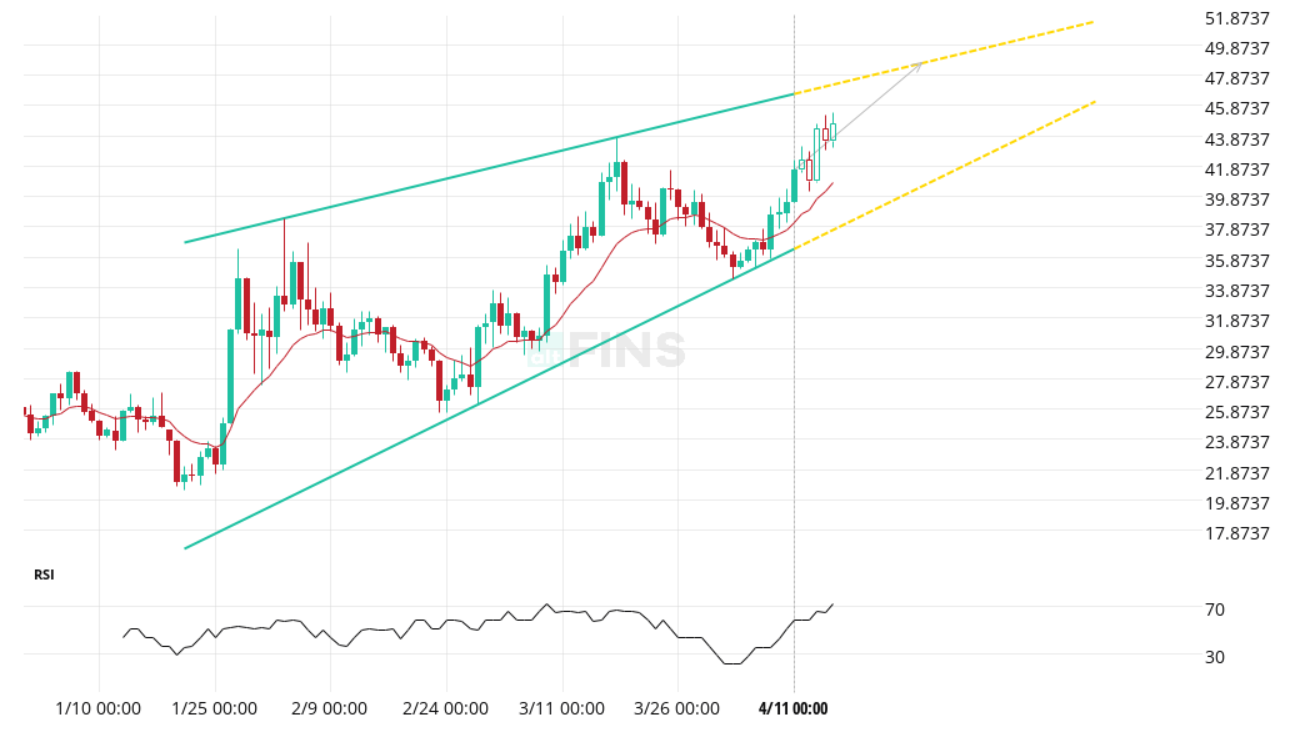
11. Rising Wedge Pattern 🔺
Type: Bullish reversal | Success rate: ~67%
Description: Two converging upward-sloping trendlines accompanied by declining volume as price rises — a classic price/volume divergence that often signals weakening momentum before a breakout move to the upside.
How to trade: Wait for a confirmed breakout above the upper trendline; place a long buy order. Full guide: How To Trade Rising Wedge →
📊 Real example: AAVE broke out of a Falling Wedge with a potential
12.84% increase toward $118.7 over 21 days.
12. Double Bottom Pattern (W-shape) ✅
Type: Bullish reversal | Success rate: 82%
Description: Two consecutive roughly equal troughs with a moderate peak between them (resembles a “W”). Forms after an extended downtrend with volume spikes at each bottom.
How to trade: Place a BUY order when price breaks through the neckline (resistance).
13. Double Top Pattern (M-shape) ⛔
Type: Bearish reversal
Description: Two consecutive roughly equal peaks with a moderate trough between them (resembles an “M”). Forms after an extended uptrend.
How to trade: Place a SELL order when price breaks through the neckline (support).
14. Triple Bottom Pattern
Type: Bullish reversal
Description: Three roughly equal troughs representing failed attempts to break support, each test accompanied by decreasing volume until breakout occurs with volume increase.
How to trade: Place a BUY order when price breaks through resistance.
15. Triple Top Pattern
Type: Bearish reversal
Description: Three roughly equal peaks representing failed attempts to break resistance, with decreasing volume until a breakdown occurs.
How to trade: Place a SELL order when price breaks through support.
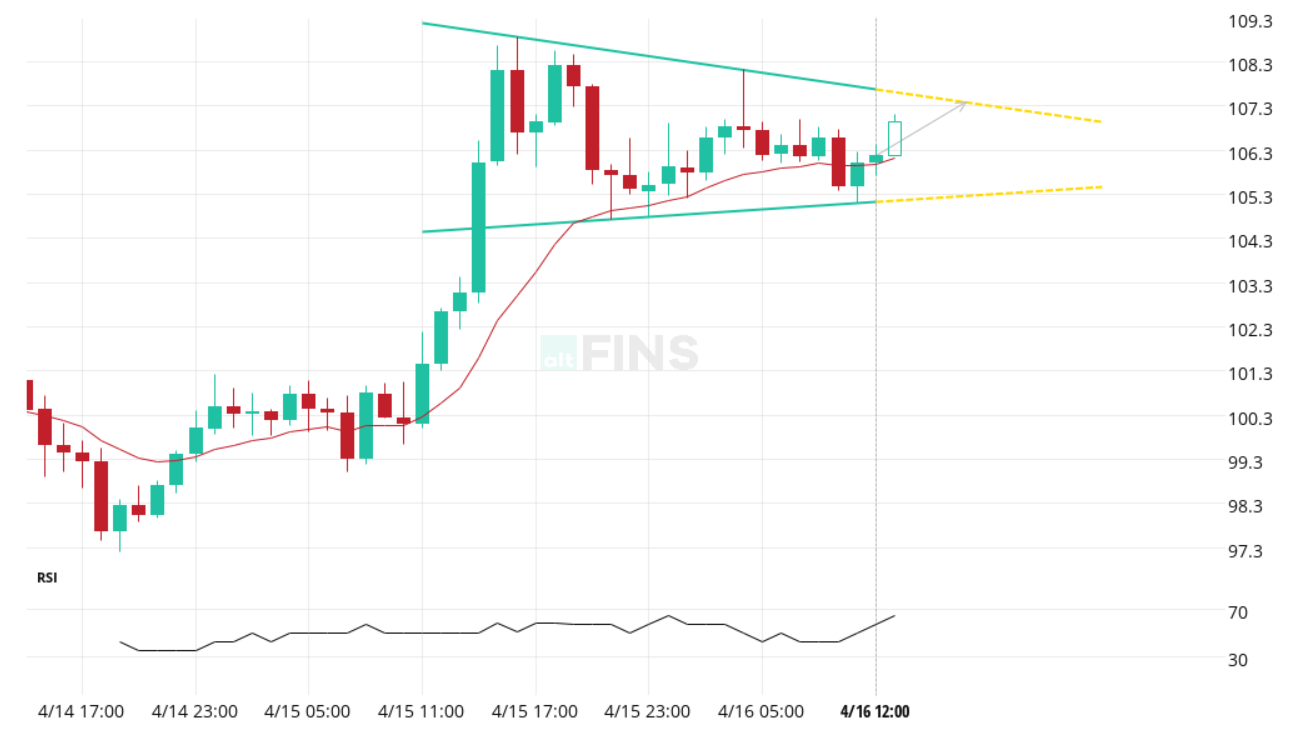
16. Bullish Pennant Pattern 🎏
Type: Bullish continuation
Description: Small symmetrical triangle (pennant) that forms after a sharp upward move (flagpole). A short-term pattern unlike a triangle.
How to trade: Enter long on breakout above the pennant’s resistance line with higher volume.
📊 Real example: AAVE broke out of a Pennant Pattern with a potential 2.9% increase toward $107.4 over 4 hours.
17. Bearish Pennant Pattern
Type: Bearish continuation
Description: Small symmetrical triangle that forms after a sharp decline, signaling brief consolidation before the downtrend resumes.
How to trade: Enter short on breakdown below the pennant’s support line.
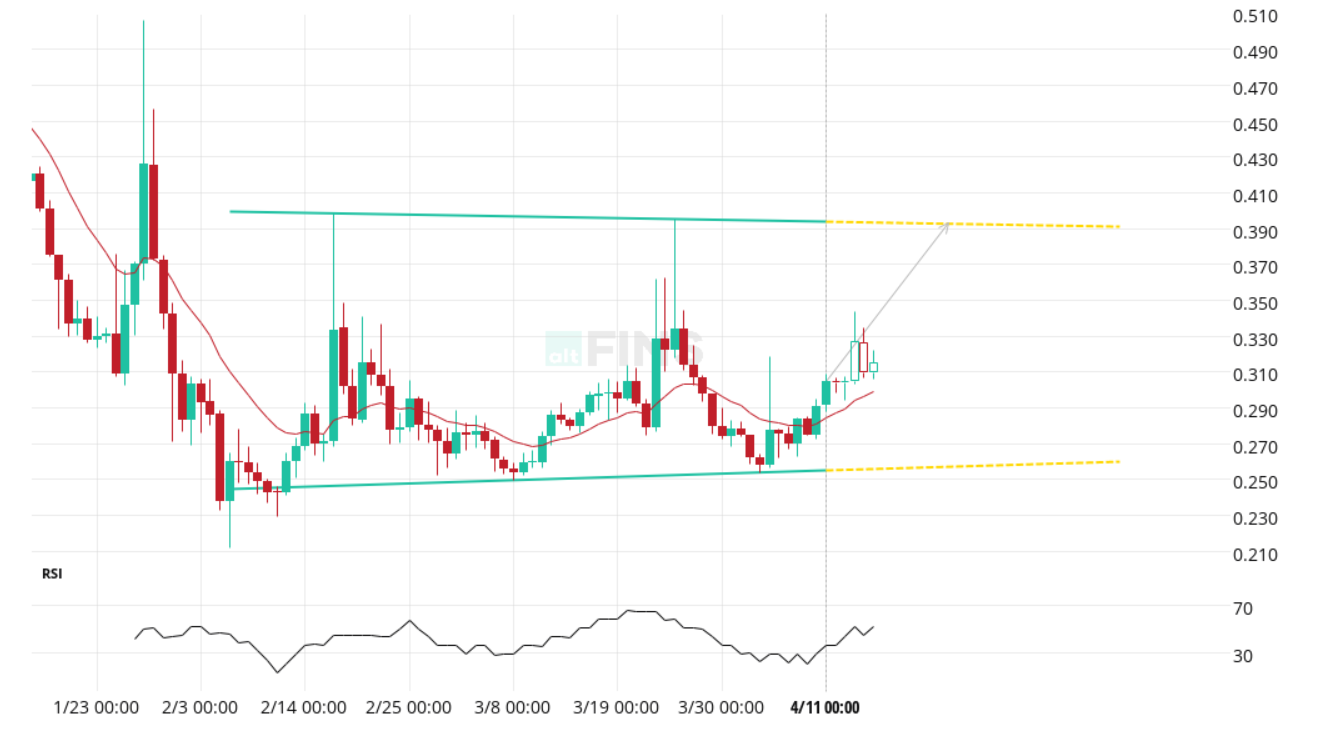
18. Rectangle / Sideways Channel Pattern ▭
Type: Continuation | Success rate: 58%
Description: Price moves sideways between parallel support and resistance — a pause in trend before continuing in the original direction.
How to trade: Swing traders buy at support and sell at resistance. Trend traders wait for breakout confirmation. Full guide: How To Trade Sideways Channel →
📊 Real example: JTO (Jito) – identified a rectangle pattern on 1 day interval with a potential 21.48% increase toward $0.393 over 10 days.
19. Support / Resistance Levels 📏
Description: Horizontal price zones where buyers find an asset attractive (support) or too expensive (resistance). Among the most critical concepts in technical analysis.
Three trading approaches:
- Key level approach — Trade when price approaches a historical level
- Key level breakout — Trade the breach with momentum continuation
- Key level bounce — Go long at support or short at resistance
Full guide: Support and Resistance Crypto: The Complete 2026 Guide →
📊 Real example: DOT (PolkaDot) is approaching support signaling a potential 20.44% bearish move toward $1.02 over 13 days.
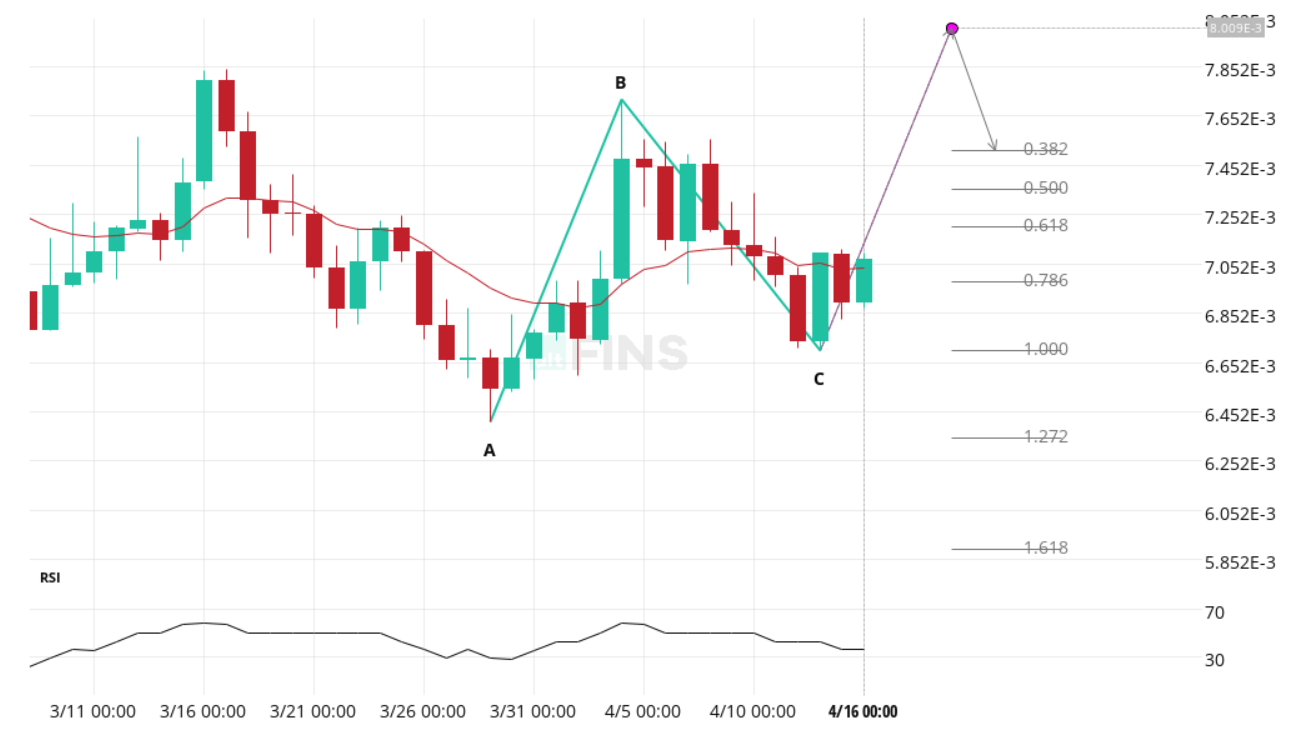
20. ABCD Harmonic Pattern 🎯
Type: Harmonic / Fibonacci-based reversal
Description: Three distinct price swings (AB, BC, CD) where CD mirrors AB in length and time. Works on any timeframe for both bullish and bearish setups.
How to trade: Enter at D-point completion, especially when aligned with Fibonacci retracement/extension levels. Full guide: Fibonacci Chart Patterns Explained →
📊 Real example: VET (VeChain) formed a bullish ABCD pattern with target levels between 7.51E-3 to 5.893E-3 within the next 5 days.
21. Butterfly Pattern 🦋
Type: Advanced harmonic reversal
Description: Four price swings (X-A, A-B, B-C, C-D) where the final leg extends beyond the starting point X — indicating an overextended market ready to reverse.
How to trade: Enter at D-point when reversal signals appear. Combine with RSI/MACD for confirmation. See Fibonacci Patterns Guide.
22-26. Additional Patterns
- Gartley — Harmonic reversal pattern using specific Fibonacci ratios (learn more)
- Drive — Three-wave momentum pattern signaling trend exhaustion
- 3-Point Extension — Fibonacci-based trend continuation
- 3-Point Retracement — Fibonacci-based pullback pattern
- Big Movement / Consecutive Candles — Momentum signals for volatility-based entries
Best Chart Patterns for Beginners
For new crypto traders, start with patterns that are easiest to interpret and have the highest historical success rates:
✅ Beginner-friendly setup:
- Focus on Breakouts (not emerging patterns)
- Use Buy direction only in uptrends
- Stick to these 5 patterns: Inverse H&S, Ascending Triangle, Channel Down, Falling Wedge, Horizontal Resistance breakouts
- Trade on 1D or 4H timeframes — less noise, fewer decisions
- Expected win rate: 67-83%
🎓 Full onboarding path: Getting Started with altFINS →
10 Steps to Trade Crypto Chart Patterns Profitably
📚 For the full lesson, see: 10 Steps for How to Trade Crypto Using Chart Patterns
Step 1: Which Assets?
altFINS analyzes the top 500 coins by market cap, updated quarterly. Explore via the Crypto Screener.
👉 Skip hours of manual chart scanning – let the Screener find breakouts →
Step 2: Choose Your Timeframe
Patterns are identified on 4 intervals: 1D, 4H, 1H, 15 min.
- Beginners: 1D, 4H
- Experienced: 1H, 15 min (requires active monitoring)
Step 3: Best Patterns for Beginners
Focus on Breakouts + Buy direction + Horizontal Resistance, Ascending Triangle, Channel Down, Falling Wedge, Inverse H&S.
Step 4: Breakout vs. Emerging
Breakouts → higher profit potential, best for trend/beginner traders. Emerging → better for advanced swing traders. Read: Emerging vs. Complete.
Step 5: Check Success Rates
Success rate = price hit forecasted target within one pattern length. Range: 56% (Pennant) to 84% (Inverse H&S).
Step 6: Calculate Profit Potential
altFINS calculates profit potential automatically: distance from current live price to forecast price.
Step 7: When to Enter
Enter when the pattern is freshly identified. Some traders wait 1-2 candles to confirm direction. Don’t miss setups — set up Chart Pattern Alerts.
Step 8: When to Exit
Exit when the pattern becomes inactive:
- Forecasted price is achieved
- 5 candles have passed since identification
- Price moves >1 standard deviation against forecast (“busted” trade)
Step 9: Align with Trend
“Trade with the trend.” Use Buy patterns in uptrends, Sell patterns in downtrends. Identify trend with the 30-period SMA slope — see SMA on altFINS.
Step 10: Risk Management
Pattern trading is a numbers game. Keep trades small, avoid leverage, and accept that even 70% win-rate patterns lose 30% of the time. Plan for 100+ trades to let statistics work. Learn more in Lesson 9 of the Crypto Trading Course.
How to Use Chart Patterns Effectively
To maximize success, combine chart patterns with these tools available on altFINS:
- RSI (Relative Strength Index) — confirms overbought/oversold conditions
- MACD (Moving Average Convergence Divergence) — validates momentum shifts
- Volume analysis — high volume on breakouts dramatically increases success rates
- Signals Summary — combines all bullish/bearish patterns in one dashboard view
- AI Copilot — ask natural-language questions and build Screener filters instantly
Summary
altFINS’ automated chart pattern recognition engine identifies 26 common crypto chart patterns across four timeframes (15 min, 1h, 4h, 1d), saving traders hours of manual chart analysis.
The most reliable patterns are Inverse Head and Shoulders (84%), Head and Shoulders (82%), and Double Bottom (82%). Lower-reliability patterns like Pennant (56%) and Rectangle (58%) benefit from additional confirmation with RSI, MACD, and volume analysis.
By combining automated pattern detection with transparent success rates, altFINS gives traders a strategic edge to make faster, more informed decisions.
Start Trading Smarter with altFINS
Get real-time access to 26 AI-detected chart patterns across 500+ coins — no manual scanning required.
Frequently Asked Questions (FAQ)
What are chart patterns in crypto trading?
Chart patterns are shapes formed by price movements on a chart that traders use to predict future price direction. They help identify whether an asset is likely to continue its trend or reverse. altFINS automatically scans hundreds of crypto assets for 26 of these formations in real time.
Which crypto chart pattern has the highest success rate?
The Inverse Head and Shoulders pattern has the highest success rate at 84%, followed by Head and Shoulders (82%) and Double Bottom (82%). These reversal patterns are the most reliable for signaling trend changes.
What are the main types of chart patterns?
There are three main types: Reversal patterns (head & shoulders, double tops/bottoms) signaling trend changes, Continuation patterns (flags, pennants, triangles) suggesting trend continuation, and Neutral patterns (symmetrical triangles) that can break either way. See the full Chart Patterns Cheat Sheet.
Why do chart patterns work in crypto trading?
Chart patterns work because they reflect collective market psychology. When traders worldwide act on the same signals, these patterns become partially self-fulfilling. In the volatile crypto market, patterns help reduce noise and identify high-probability setups.
How do you identify chart patterns?
Patterns are identified by spotting recurring formations in price movement — triangles, wedges, channels, flags, head-and-shoulders. Manual identification is time-consuming, which is why tools like altFINS automatically scan 500+ coins across 4 timeframes 24/7.
How do you trade chart patterns?
Wait for a confirmed breakout or breakdown, enter in the direction of the move, set stop-losses to manage risk, and use measured targets based on the pattern’s dimensions. Follow the complete 10-step guide, and set Chart Pattern Alerts for breakouts.
How accurate are crypto chart patterns?
Accuracy varies: the strongest patterns (Inverse H&S, Double Bottom) have 82-84% success rates, while weaker ones (Pennant, Rectangle) hover around 56-58%. No pattern is 100% reliable — combine with RSI, MACD, and volume confirmation for best results.
How many chart patterns should a trader know?
Focus on 8-10 common patterns: triangles, flags, wedges, head and shoulders, and double tops/bottoms. altFINS covers all 26 popular patterns automatically, letting you focus on execution rather than memorization.
What’s the best chart pattern for beginners?
The Inverse Head and Shoulders is ideal for beginners — it has the highest success rate (84%) and clear entry/exit signals. Combined with Ascending Triangles and Falling Wedges on the 1D timeframe, beginners can achieve strong results.
Does altFINS detect chart patterns automatically?
Yes. altFINS’ AI engine scans the top 500 cryptocurrencies 24/7 and automatically detects all 26 chart patterns across four timeframes (15 min, 1h, 4h, 1d). It also calculates profit potential, success rates, and provides real-time alerts.
Continue Learning on altFINS
Individual Pattern Guides
- → How To Trade Inverse Head and Shoulders Pattern
- → How To Trade Ascending Triangles
- → How To Trade Descending Triangle
- → How To Trade Symmetrical Triangle
- → How To Trade Bullish Flag Pattern
- → How To Trade Falling Wedge Pattern
- → How To Trade Rising Wedge Pattern
- → How To Trade Sideways Channel Pattern
Strategy & Education
- → 10 Steps for How to Trade Crypto Using Chart Patterns
- → Chart Patterns Cheat Sheet
- → Emerging vs. Complete Patterns Explained
- → Support and Resistance Crypto: 2026 Guide
- → Fibonacci Chart Patterns Explained
- → Free Crypto Trading Course (10 Lessons)
- → Getting Started with altFINS
Platform Features