


Market Structure Analysis Tools & Strategies for 2026
Market structure analysis remains the bedrock of smart trading decisions in 2026. Markets move faster than ever, and traders need tools that show the real reasons behind price moves. The strongest edge today comes from mixing classic price action with modern volume tools and AI detection.
Moreover, the gap between casual chart reading and pro-level analysis keeps shrinking each year. Platforms now bring order flow, liquidity tracking, and pattern detection into a single workspace. Algorithms scan thousands of charts at once. Therefore, choosing the right tools and using them well defines who adapts fast and who lags behind.
Why Order Flow Visibility Anchors the ATAS Approach
For traders seeking deeper market transparency, professional-grade software like ATAS turns raw exchange data into clear visual stories about supply, demand, and aggression. The platform processes Time and Sales, Level II depth, and HFT activity. It then maps the data into footprint charts, volume profiles, and Smart DOM views. As a result, decisions shift from guesswork to direct observation of what large players are actually doing.
The toolkit links to more than 25 global exchanges across futures, stocks, and crypto markets. In addition, it offers over 70 volume tools, 240 indicators, and 400 cluster variations inside footprint charts. Active traders, therefore, gain a granular view of where liquidity sits and how it shifts each minute.
Furthermore, the platform gives users access to a Market Replay feature for risk-free practice. The tool plays back historical data tick by tick. As a result, learning curves get shorter for both new and experienced traders. The platform also runs on Windows and macOS, and a free trial offers fourteen days of full access to all advanced tools. Built-in journal and statistics modules then turn each session into useful data for review.
Core Building Blocks of Modern Market Structure
Market structure rests on a few timeless ideas that every analyst still relies on in 2026. Spotting swing highs and lows, mapping zones of interest, and reading trend rhythm remain essential skills. However, the way traders measure these structures has evolved with better data feeds and smarter algorithms.
Swing Highs, Swing Lows, and Trend Sequencing
At the simplest level, an uptrend prints higher highs and higher lows. A downtrend does the opposite, with lower highs and lower lows. Meanwhile, sideways markets oscillate between rough boundaries and signal indecision. Spotting the moment this sequence breaks gives an early warning of a coming change in trend.
Support and Resistance Zones
Horizontal support and resistance zones still drive a huge share of profitable setups. These zones gain strength each time the price respects them without breaking through. Crypto traders lean on automated detection because manual line drawing cannot scale across thousands of assets. For a deeper framework, this complete 2026 guide to crypto support and resistance walks through how levels are confirmed, scored, and traded with consistency.
The most-used building blocks across 2026 strategies include:
- A swing structure that defines direction through higher highs and higher lows
- Key levels where price has reacted at least three times before
- Liquidity pools made of resting stop orders that often attract price
- Order blocks that mark candle zones before strong reversals
- Imbalances or fair value gaps left by sharp directional moves.
Modern Tools That Define 2026 Strategies
The toolset for market structure has grown well beyond moving averages and trendlines. Today, traders blend order flow, volume clusters, machine learning, and on-chain data into one workflow. Each tool answers a different question. The best strategies, in turn, combine them with clear rules.
Cluster charts, for example, break each candle into rows of price levels and show the volume traded at every step. Heatmaps add another dimension by showing resting orders that may never get executed. Together, these views reveal a hidden intent that classic charts simply cannot capture.
The table below compares the most influential tool categories used right now:
| Tool Category | Primary Insight | Best Suited For |
| Footprint charts | Bid and ask aggression inside each bar | Scalping and day trading |
| Volume profile | Price levels with the heaviest activity | Identifying value areas |
| Smart DOM | Real-time liquidity in the order book | Execution timing |
| AI pattern detection | Automated chart pattern flagging | Multi-asset screening |
| Heatmaps | Resting liquidity visualization | Spotting hidden orders |
How Do Traders Apply These Tools in Practice?
Reading single tools in isolation rarely produces steady results. Instead, top performers stack signals so that several independent indicators agree before they act. The following shows how this layered approach works on a live chart.
Combining Volume Profile With Footprint Charts
The volume profile shows where heavy trading has happened over a period. Footprint charts then show how that volume split between buyers and sellers. Together, they answer two clear questions. Where does the market care, and who is winning the fight? In practice, traders look for a high-volume node lining up with a footprint imbalance to confirm a likely turning point. The same logic applies to the point of control from the prior session.
Pairing Smart Money Concepts with Live Order Flow
Smart money methods focus on the actions of major institutional players who move serious capital. Many order flow specialists now combine the Smart Money Concept and the ICT framework with footprint charts for confirmation. By layering live volume tools on top of structural ideas, traders verify whether breakouts and reversals match real participant behavior. The Change of Character signal, for example, often gains weight when paired with a clear delta shift on the cluster chart.
Common setups and their preferred tool combinations are shown below:
| Setup | Tool Combination | What It Reveals |
| Breakout confirmation | Volume profile plus delta | Whether the breakout has real conviction |
| Reversal signal | Footprint plus key level | Aggressive absorption at a structural zone |
| Trend continuation | DOM plus cumulative delta | Sustained order flow imbalance |
| Stop hunt detection | Heatmap plus Time and Sales | Liquidity sweeps before sharp reversals |
Chart Patterns and AI Detection in 2026
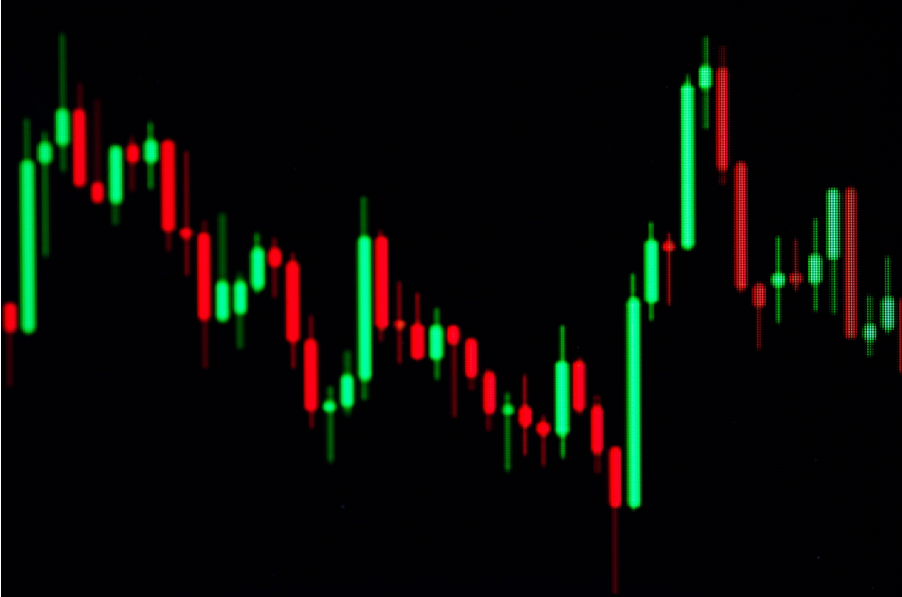
Classical chart patterns still drive a large share of trading signals across crypto, equities, and futures. However, manual pattern hunting cannot keep up with thousands of assets traded around the clock. Modern platforms now apply machine learning to scan every chart in seconds. They flag setups by reliability score and time interval. For example, this 2026 guide to AI-detected crypto chart patterns explains how 26 patterns are scored, classified, and traded with clear rules.
Popular patterns used in 2026 strategies include:
- Ascending and descending triangles
- Channels in three directions, including up, down, and sideways
- Head-and-shoulders, plus their inverse versions
- Double tops and double bottoms
- Pennants, flags, and rising or falling wedges.
Patterns also come in two states: emerging and complete. Emerging patterns still form within their boundaries. They tend to suit swing traders. Complete patterns have broken out. As a result, they favor trend traders who ride the new move. The same logic applies across the daily, four-hour, one-hour, and fifteen-minute timeframes.
The table below shows reported success rates for several widely traded patterns:
| Pattern | Reported Success Rate |
| Ascending triangle | Up to 83 percent |
| Inverse head and shoulders | Up to 84 percent |
| Falling wedge | Up to 83 percent |
| Channel down breakout | Up to 72 percent |
| Horizontal resistance break | Up to 83 percent |
Building a Practical 2026 Workflow
A repeatable workflow turns isolated tools into a clear strategy with measurable results. Above all, the workflow must define when to look, what to look for, and when to act. The next steps capture the approach used by many professional desks today.
- Map the structure on a higher timeframe to set the directional bias for the session
- Identify high-value zones using volume profile, key levels, or AI-flagged patterns
- Wait for the price to reach those zones before activating order flow tools
- Confirm with footprint, delta, or DOM behavior that aligns with the expected direction
- Execute with a clear stop based on structural invalidation, not on a fixed dollar amount.
Risk management forms the final pillar of the workflow. Position sizing should be based on stop distance, not on gut feeling. In addition, the risk per trade should stay small, often between one and two percent of total capital. Successful traders also keep a journal of every trade for later review.
Finally, the workflow should adapt to the trading session. The Asian session usually brings tighter ranges and slower moves. The London open often produces false breakouts before a clear trend. The New York session, on the other hand, frequently tests the levels built earlier in the day. Mapping these tendencies improves both entry timing and stop placement.
What Should Beginners Focus on First?

New traders often spread themselves too thin across too many indicators and platforms. Instead, focusing on a small toolkit with one or two reliable setups produces faster progress. Above all, repetition and journaling matter more than collecting new methods.
For beginners, the clear priorities are these:
- Master one timeframe before adding more layers of complexity
- Learn to identify key horizontal levels by hand before trusting automation
- Study volume context first, then add momentum and trend indicators
- Use replay tools, such as ATAS Market Replay, to drill setups without risking capital
- Keep a journal of every trade and review the results each week.
Furthermore, beginners should treat their first months as a learning phase rather than a profit race. Backtesting, paper trading, and small live positions all build skill faster than aggressive sizing. Patience, in short, pays better than speed for new traders. A solid base also makes the move to advanced tools much smoother later on.
Final Thoughts
Market structure analysis in 2026 is no longer about drawing a few trendlines on a basic chart. The modern approach blends classic concepts with order flow data, volume analytics, AI-driven pattern detection, and a steady workflow. Each tool covers a different angle of the same market. The combined view, as a result, builds a measurable edge over time.
Most importantly, no single tool replaces clear thinking and disciplined execution. Traders who study the basics, test their ideas, and apply the right tools tend to outperform those chasing the latest trend. Therefore, the modern trader thrives by selecting the right toolkit, learning it deeply, and applying it with consistency every single trading day.
 Written byLenka Fetyko
0 Comments
Leave a comment