The $0.34 Hurdle: Your Gateway to a 15% Crypto Gain?
Get ready, crypto traders! We've spotted a compelling setup for a potential upside move in an altcoin that has just signaled a significant bullish reversal. While the market always demands caution, the technical indicators are lining up to suggest an exciting opportunity.
A Bullish Reversal Takes Hold!
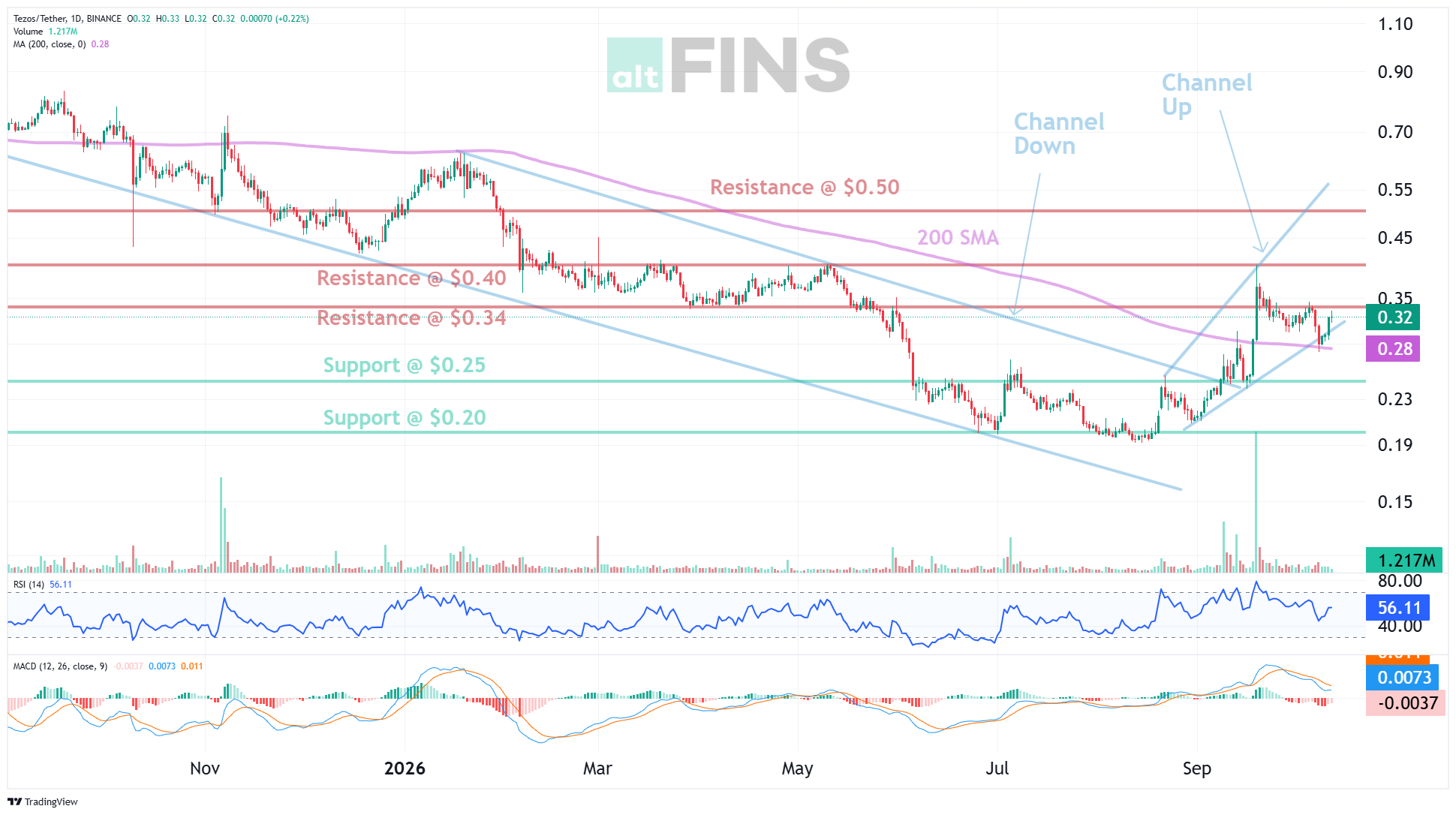
The big news is clear: this asset has officially flipped from bearish to bullish! We've seen a decisive breakout from a prolonged Channel Down pattern, followed by a strong push above the crucial 200-period Simple Moving Average (SMA). These two events combined are powerful signals of a fundamental shift in trend.
Adding to the bullish conviction, the overarching trend is unequivocally positive:
- Short-term trend: Up
- Medium-term trend: Strong Up
- Long-term trend: Up
This consistent upward momentum across all timeframes paints a very optimistic picture.
The Key Levels: $0.34 is Your Next Target!
After confirming its bullish reversal, the price surged, hitting resistance at $0.40 before pulling back. This rejection isn't a red flag, but rather a setup for the next leg up.
The immediate challenge for the bulls lies at $0.34. This is our nearest significant resistance zone. The actionable plan for traders is to wait for a confirmed break above this $0.34 level.
Why is this so important? A successful push past $0.34 could unlock a +15% potential upside, targeting a retest of that $0.40 resistance zone. Don't miss this move – set a price alert now to stay ahead!
Navigating the "Channel Up" Pattern
Currently, the asset is trading within a well-defined Channel Up pattern. This pattern offers two primary trading strategies:
- Trading Within the Channel: For traders who believe the price will remain contained, opportunities arise to buy near the lower trendline and sell near the upper trendline, capitalizing on the natural price fluctuations within the channel.
- Trading the Breakout: Should the price decisively break through either the upper or lower trendline, it often signals a rapid move in the direction of the breakout. This is where significant momentum trades can emerge.
Understanding these chart patterns is crucial for any trader. You can learn more about trading them in Lesson 8 of a comprehensive trading course.
Momentum Check: A Shift is Brewing!
While the overall trend is strong, the momentum has been bearish, but it's showing signs of inflection – meaning it's bottoming out and preparing for a potential reversal to the upside!
Here's what the indicators tell us:
- The MACD Line is still below the MACD Signal Line, indicating bearish momentum dominance for now.
- However, the MACD Histogram bars are rising. This is a crucial early signal that bearish momentum is waning and an upswing could be on the horizon.
- The RSI-14 levels confirm that the price is neither overbought nor oversold (RSI is between 30 and 70), leaving plenty of room for upward movement without immediate exhaustion.
Key Support & Resistance Zones to Watch
Keeping these levels in mind is vital for managing your trades and understanding potential turning points:
- Nearest Resistance Zones: $0.34, then $0.40
- Nearest Support Zones: $0.29, then $0.25
These levels can act as psychological barriers or potential bounce points, guiding your entry and exit strategies.
Ready to Trade? Educate Yourself First!
This setup presents a clear opportunity, but successful trading always hinges on knowledge and discipline. If you're looking to capitalize on moves like this, consider deepening your understanding of:
- Trading Breakouts: Learn the mechanics in Lesson 7.
- Risk Management: Essential for protecting your capital, master it in Lesson 9.
Stay informed, trade smart, and keep an eye on that $0.34 level – it might just be your next profit gateway!